Porto Itinerary: 5 Days in Porto, Portugal – Where to Stay, Top Sights, Food and Douro Sunsets
Our 5-day Porto itinerary from October 2026: staying at Casas do Rivoli in the centre, Bolhão Market, São Bento Station, Livraria Lello, the gilded Church of São Francisco, sunset at Serra do Pilar and the Foz lighthouse, plus restaurant picks and Trip.com booking links.
This article was submitted by a member. Views and content are the author’s own and do not represent this site.
This article contains commercial links (affiliate or paid) that may earn the author a commission.
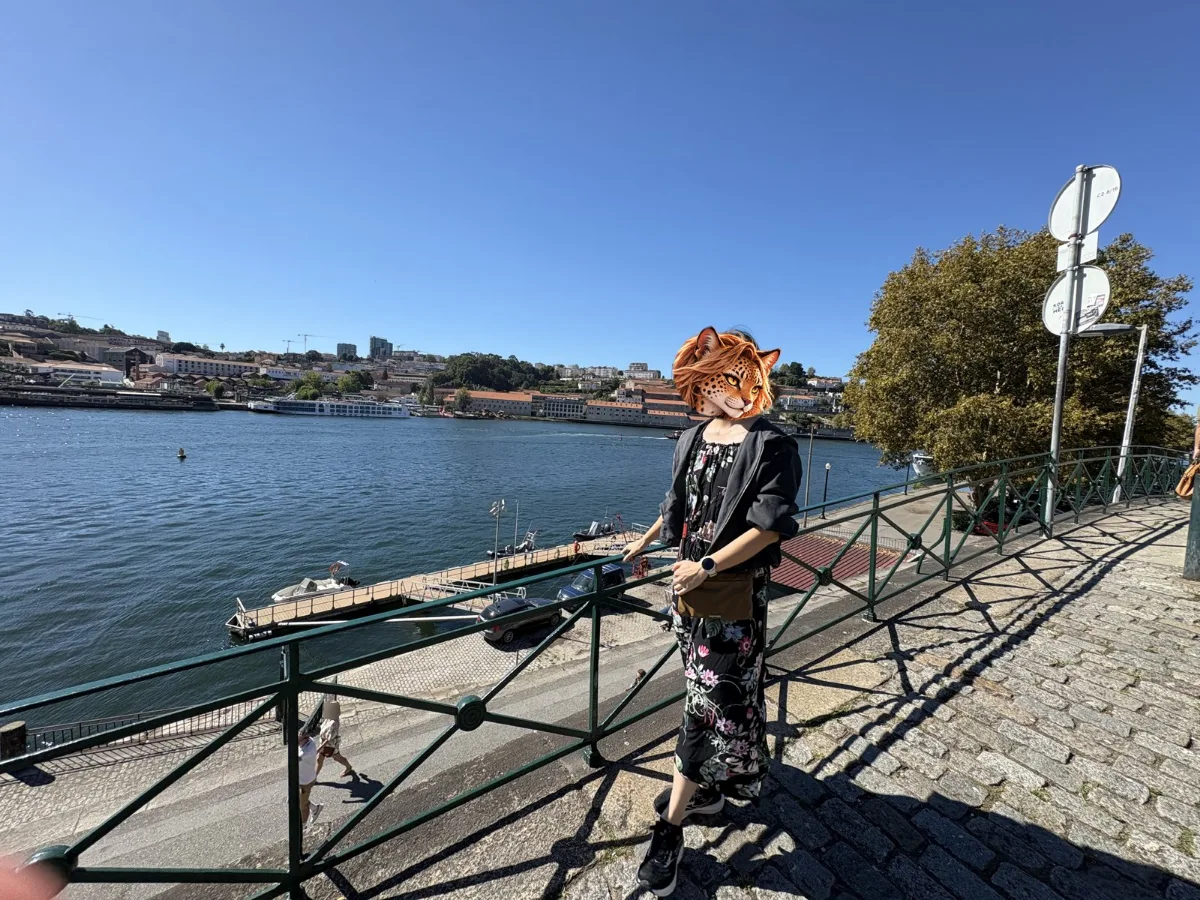
The riverside promenade along the Douro in Porto under a blue sky, my very first impression of the city. (Photo: TIME TRAVELER editor)
If you missed the first part of this trip, start here: Portugal Travelogue Part 1: Lisbon + Sintra. On October 8 we took the train north from Lisbon, and this post takes you to Porto in northern Portugal. The city climbs the hillsides above the Douro River, and its historic centre was added to the UNESCO World Heritage List in 1996.
We stayed in Porto from October 8 to 12, five days and four nights in total. Our base was right in the city centre and we walked almost everywhere, taking in the market, the old town's tiles, churches, the riverfront and the seaside, and eating at quite a few restaurants along the way. This post pulls together everything about where we stayed, what we saw, what we ate and how we got around.
1. Porto itinerary at a glance: 5 days, 4 nights
| Date | Area | Highlights |
|---|---|---|
| Oct 8 | Lisbon → Porto | Train north, check in at Casas do Rivoli, Bolhão Market, Café Santiago, sunset at Serra do Pilar |
| Oct 9 | City centre → Ribeira riverfront | Brunch at Floresta, São Bento Station, Carmo Church, Livraria Lello, Clérigos Church, Rua das Flores, Palácio da Bolsa, Douro riverside, A Grade |
| Oct 10 | Ribeira | An in-depth visit to the Church of São Francisco, Bolhão a Gosto |
| Oct 11 | Rua de Santa Catarina → Vila Nova de Gaia → Foz | Capela das Almas, Gaia's port wine cellars, Felgueiras Lighthouse, Pérgola da Foz, Pedro dos Frangos |
| Oct 12 | Porto → Lisbon | Breakfast at McDonald's Imperial, ride back to Lisbon, dinner at Alyonna Bliss (Lisbon) |
| Oct 13 | Lisbon | Breakfast at Starbucks |
2. Where to stay in Porto: Casas do Rivoli
After arriving in Porto on October 8, we took a Bolt to our accommodation, Casas do Rivoli. It's near the City Hall square in a great location, with the market, São Bento Station and the old town all within easy walking distance. The apartment was well equipped and even had a washing machine, which is a real lifesaver on a long trip. It's a place I'd personally recommend.
On the day we checked in, there happened to be a protest nearby, and we saw young people pitching tents outside. It was one of the more unusual things we witnessed on this trip.
Porto's sights are concentrated in the city centre and along the river, so I'd suggest staying in the centre. You can head out on foot every day and easily pop back to rest.
If you're looking for a place to stay in central Porto, start by comparing options around the City Hall square and São Bento Station for your dates and budget.
3. Day 1 (Oct 8): Bolhão Market, a francesinha and sunset at Serra do Pilar
Bolhão Market (Mercado do Bolhão)
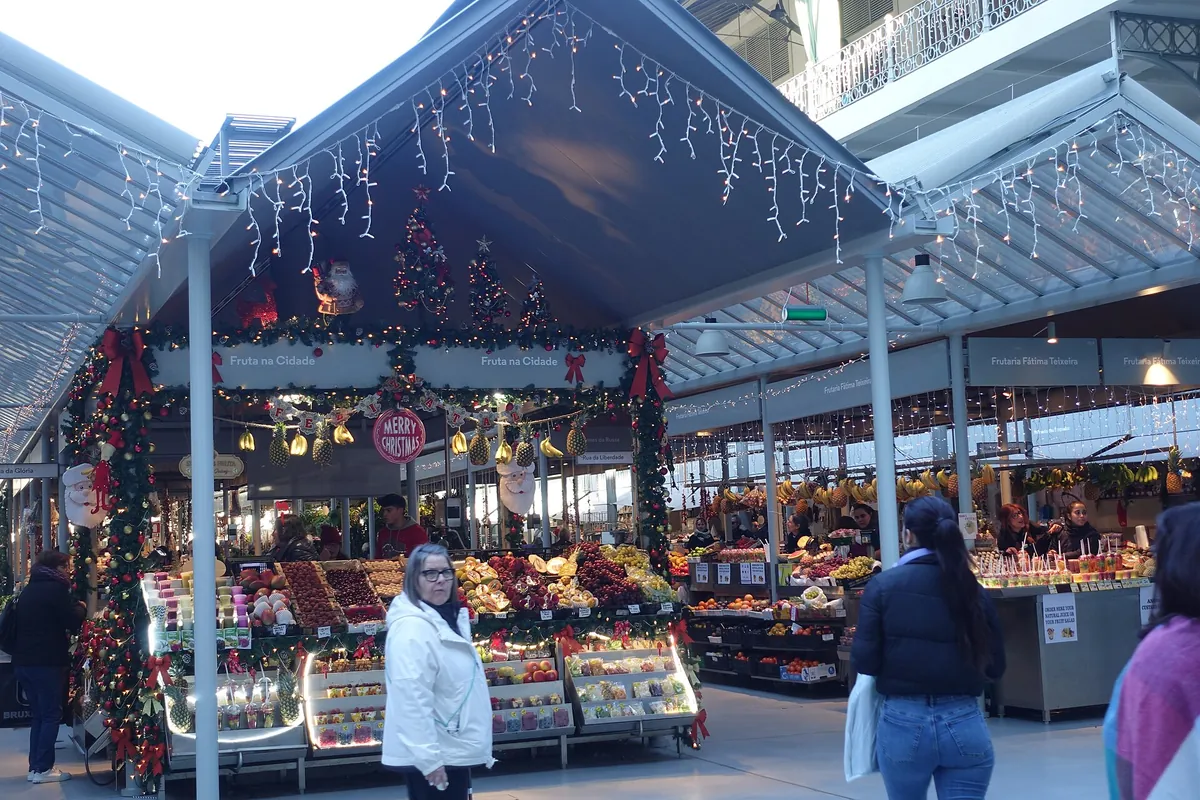
Image: Joseolgon / Wikimedia Commons / CC BY 4.0 (source); licensed image from the web. Photo not taken by the author.
Once we'd dropped off our bags, our first stop was Bolhão Market (Mercado do Bolhão). It has fresh produce, prepared food and souvenirs, and wandering around gives you a real feel for local life. I highly recommend it, ideally on your first day, so you can spot anything you'd like to take home. Note that the market is closed on Sundays and public holidays.
After the market we stopped at a supermarket on the way back to stock up on everything we'd need for the next few days.
Dinner: a francesinha at Café Santiago
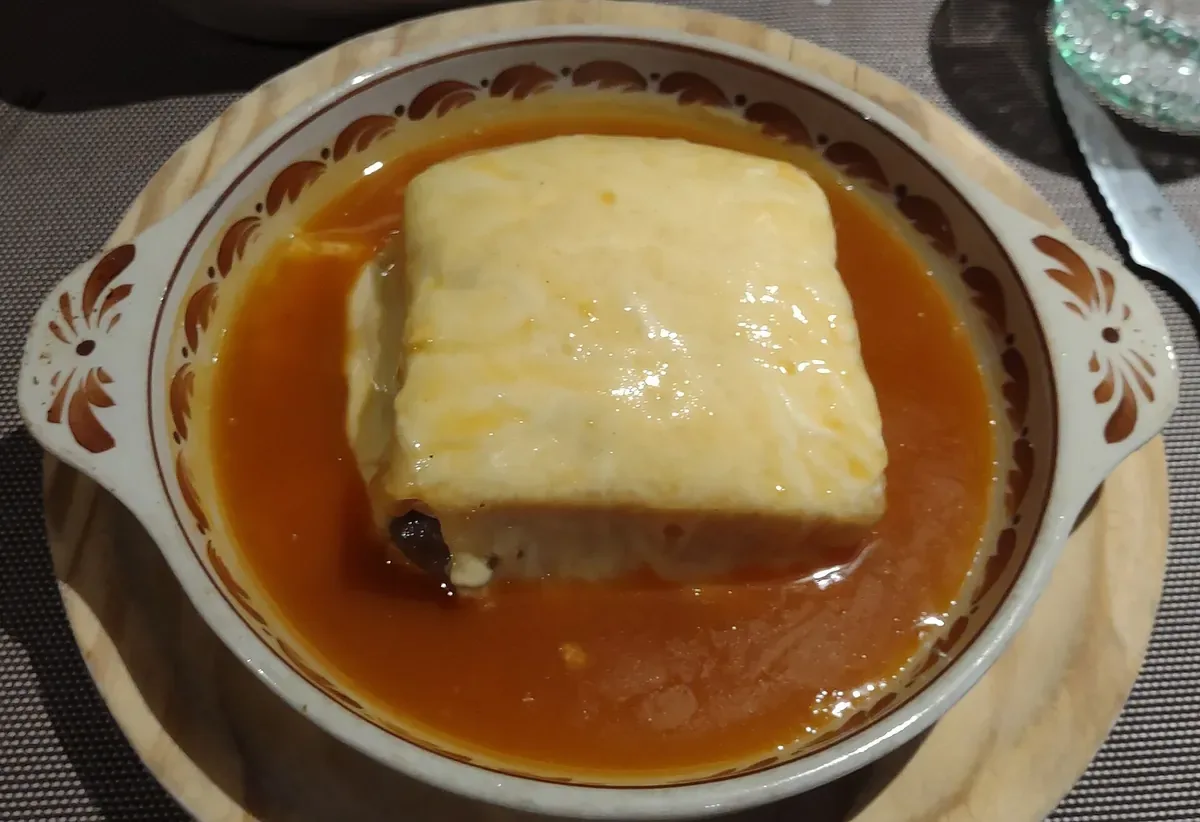
Image: Ih8connecticut / Wikimedia Commons / CC0 (source); illustrative photo of a francesinha. Photo not taken by the author, and not a dish from Café Santiago.
For our first dinner we went to Café Santiago, famous for its francesinha, and ordered a Brazilian-style grilled meat set and a francesinha. The portions were huge and the flavours rich and on the salty side. We left very full, but we didn't order the sandwich again for the rest of our stay.
Walking across the Luís I Bridge to watch the sunset at Serra do Pilar
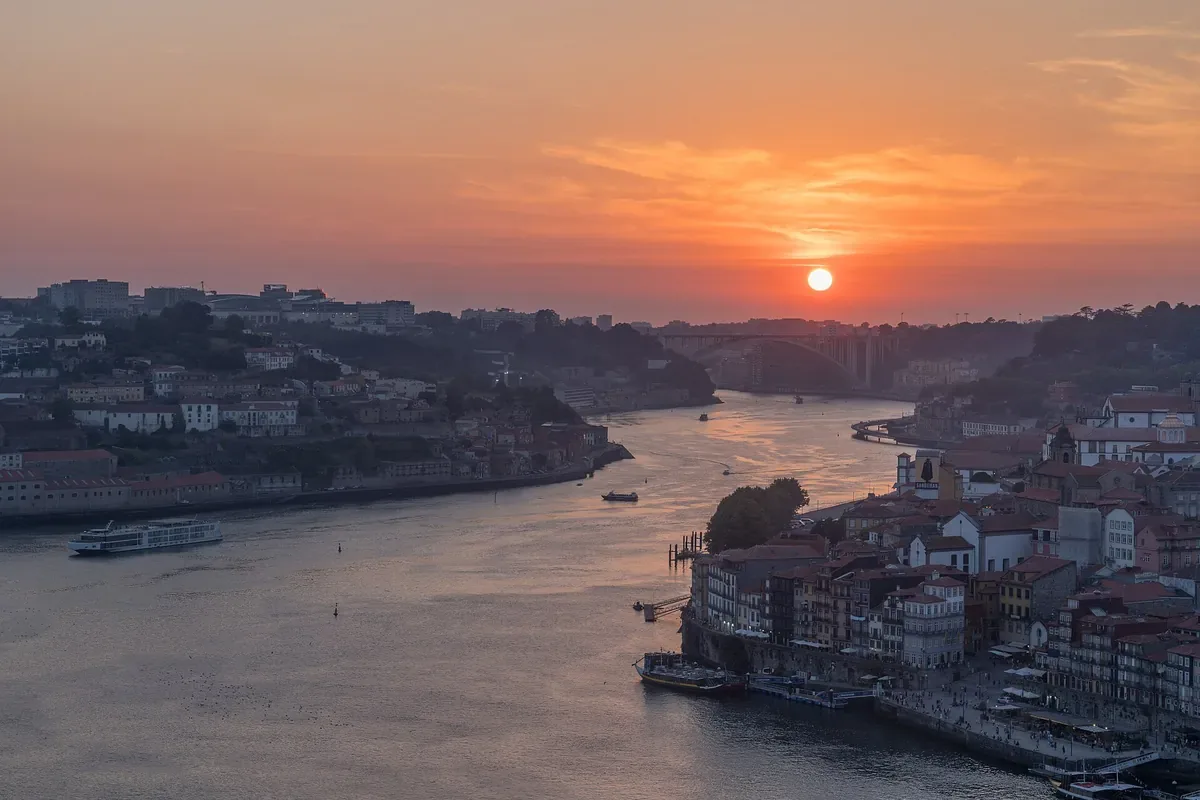
Image: Alexkom000 / Wikimedia Commons / CC BY 4.0 (source); licensed image from the web. Photo not taken by the author.
After dinner we strolled to the Luís I Bridge, walked across to Vila Nova de Gaia on the other side, and continued up to the Serra do Pilar viewpoint (Miradouro da Serra do Pilar) for the sunset. From here you can see the bridge, the Douro and the old town on the riverbank all at once, and the outdoor viewpoint is free. I can't recommend it enough. The sunset here and dusk at São Jorge Castle in Lisbon were the two moments that stayed with me most from this whole trip to Portugal.
4. Day 2 (Oct 9): Old-town tiles, Livraria Lello and the Ribeira riverfront
Breakfast: Floresta Café by Hungry Biker
On day two we had breakfast at Floresta Café by Hungry Biker on Rua das Flores. It's highly rated and very popular with tourists. The brunch sets were around €15–20: tasty, but not cheap.
São Bento Station
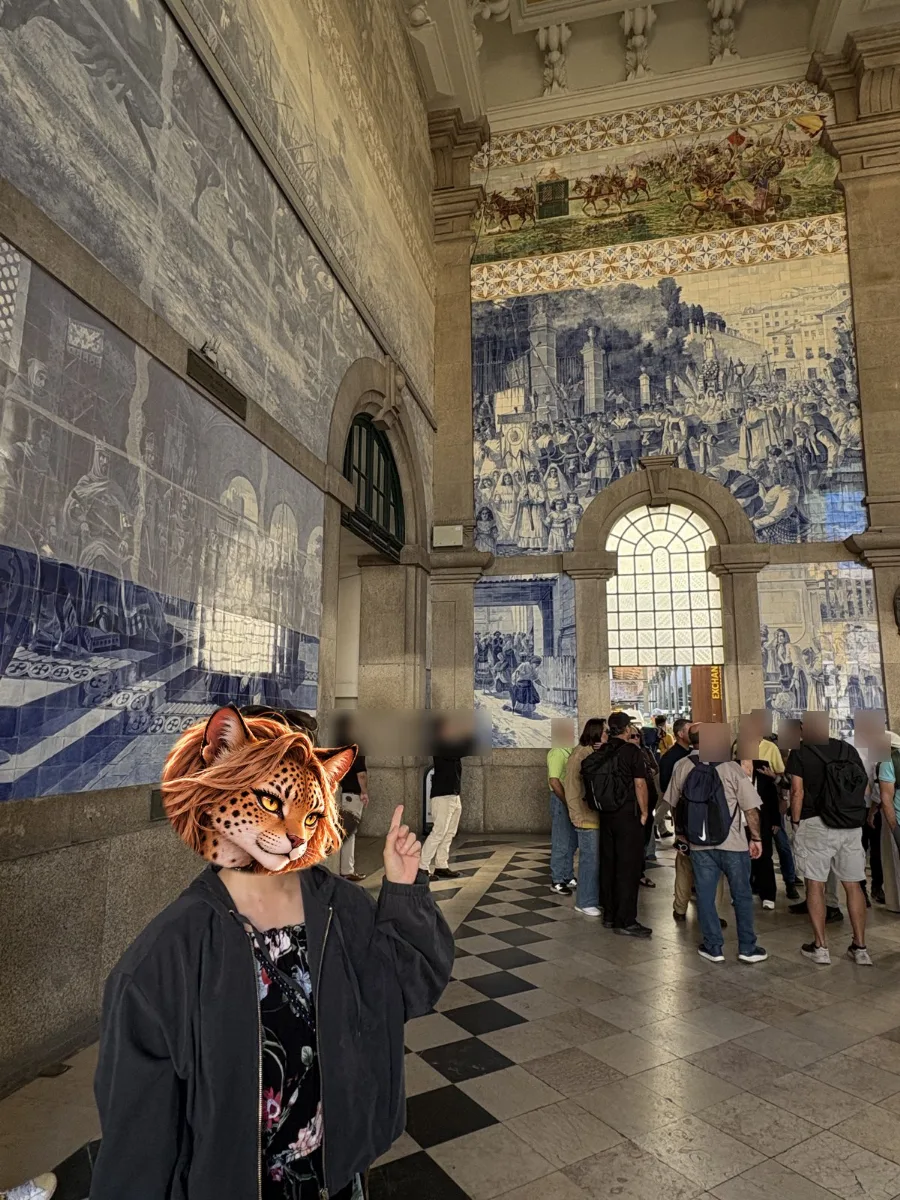
The hall of São Bento Station (Estação de São Bento), its four walls covered in blue-and-white tile panels with a colourful frieze above. (Photo: TIME TRAVELER editor)
Next I went to see São Bento Station, often called one of the most beautiful train stations in the world. Around 20,000 tiles in the main hall were painted by the artist Jorge Colaço, depicting battles from Portuguese history and scenes of rural life. It's still a working station, so you can walk into the hall without a ticket. Don't forget to look up at the colourful frieze.
A giant globe under the arcade
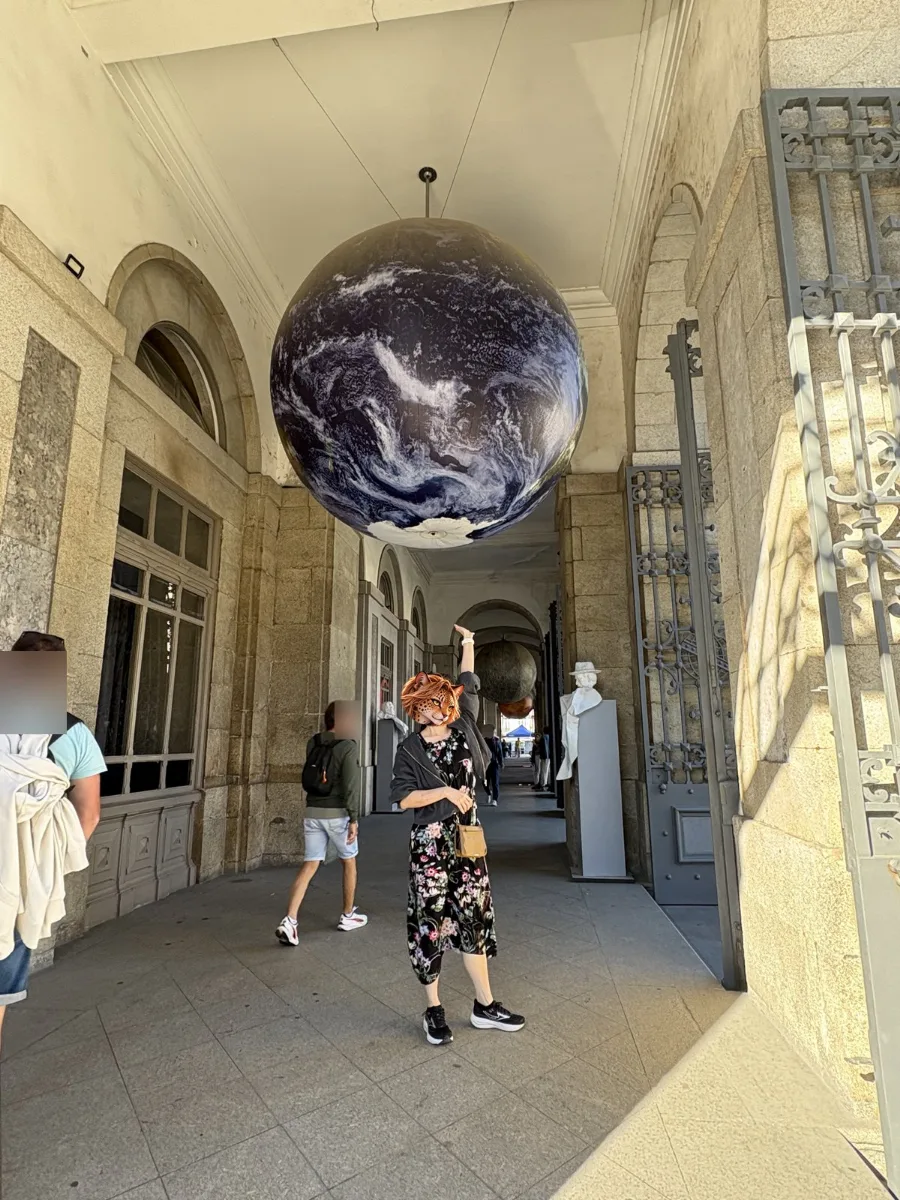
A giant globe installation hanging in the arcade next to Praça de Gomes Teixeira. (Photo: TIME TRAVELER editor)
On the way to Carmo Church, I stumbled upon a huge globe suspended under an arcade beside the square. The finely detailed clouds and oceans made it impossible not to stop for a photo. It was one of my favourite little surprises of the trip.
The blue-and-white side wall of Carmo Church
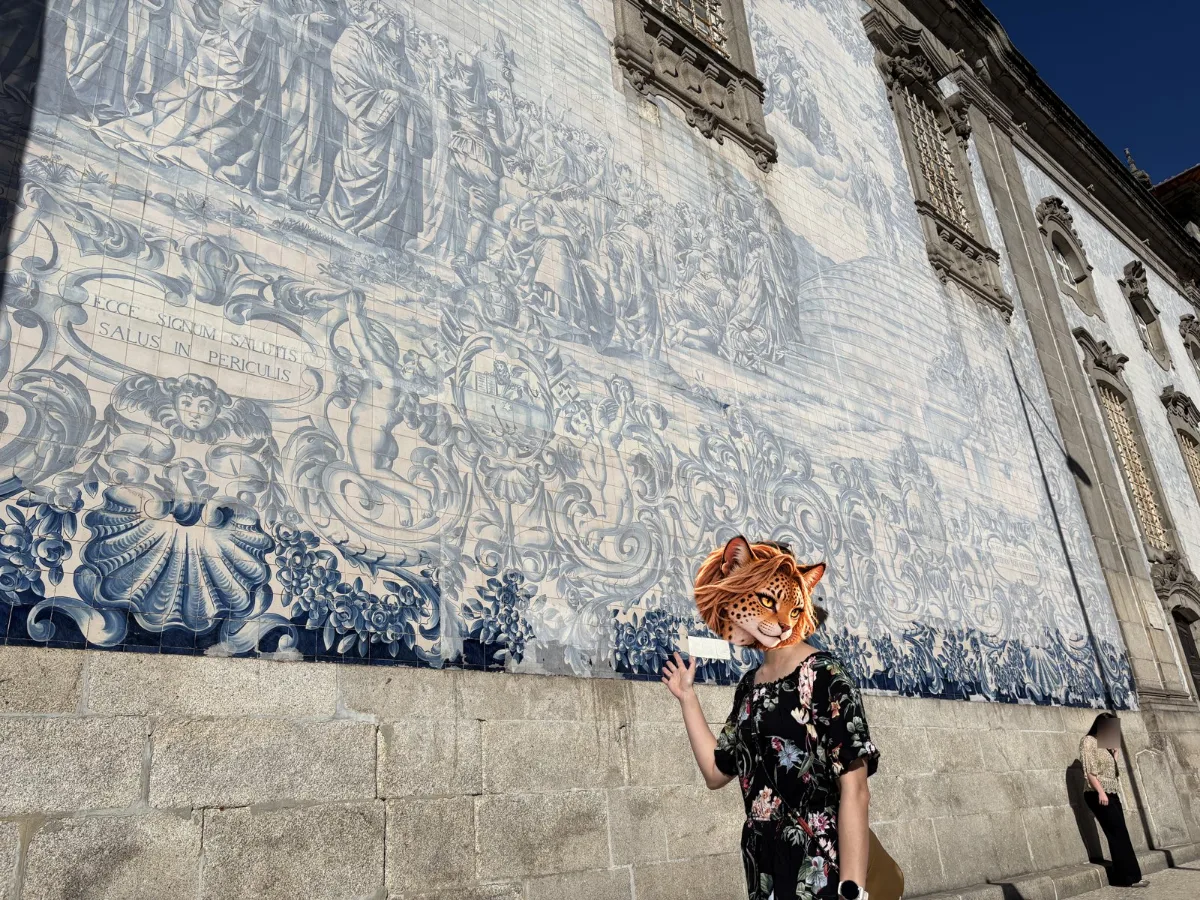
The vast blue-and-white tiled side wall of Carmo Church (Igreja do Carmo), with people looking tiny beneath it. (Photo: TIME TRAVELER editor)
Carmo Church is best known for the huge tile panel covering its side wall, which you can see right from the street. The sheer scale is striking, so stand well back if you want to fit the whole thing in your shot.
Livraria Lello
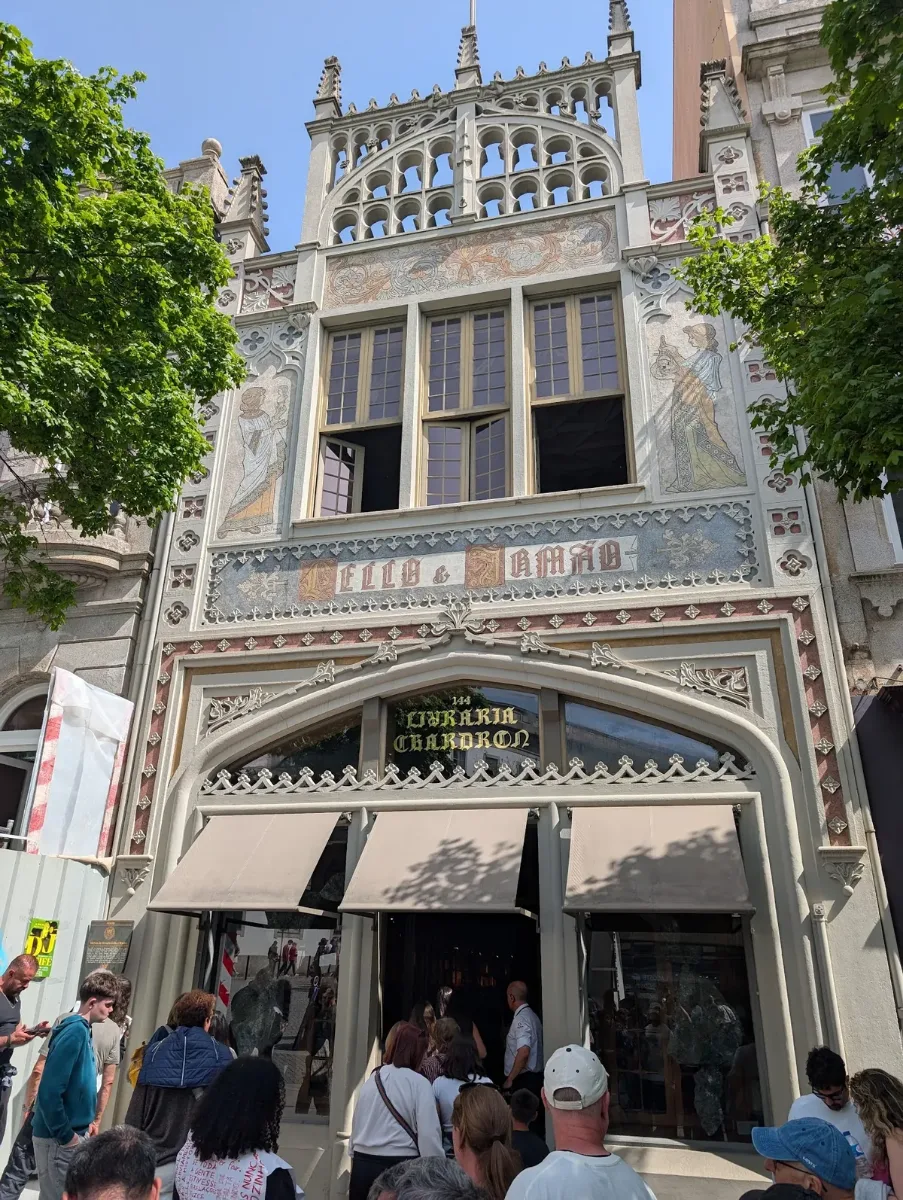
Image: Guinness323 / Wikimedia Commons / CC0 (source); licensed image from the web. Photo not taken by the author.
Livraria Lello is just around the corner, but we hadn't bought tickets in advance and the queue was so long that we ended up only looking at it from outside. Entry requires a ticket, so I'd recommend checking the booking options on the official Livraria Lello website before you go and getting your tickets early.
If you'd like to explore the surrounding old town with a guide, you could also look at guided tours that include Livraria Lello (check each tour's description to see whether entry is included).
Browse Porto tours and activities on Trip.com
Clérigos Church and Tower
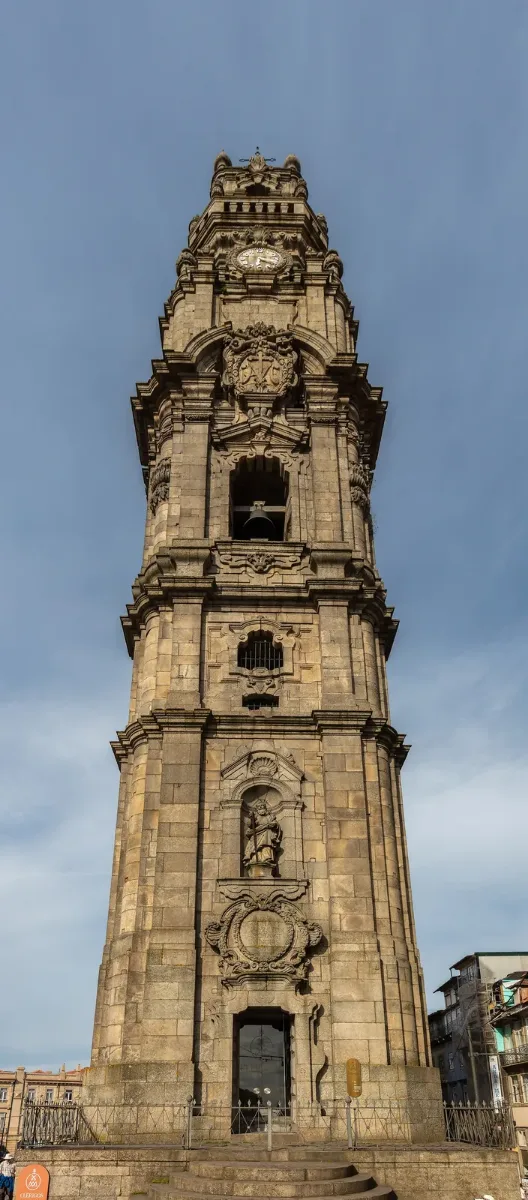
Image: Diego Delso / Wikimedia Commons / CC BY-SA 4.0 (source); licensed image from the web. Photo not taken by the author.
The bell tower of Clérigos Church (Igreja dos Clérigos) is a Porto landmark that you can see from all over the city. As you wander around, you'll often look up and find it right there.
Rua das Flores
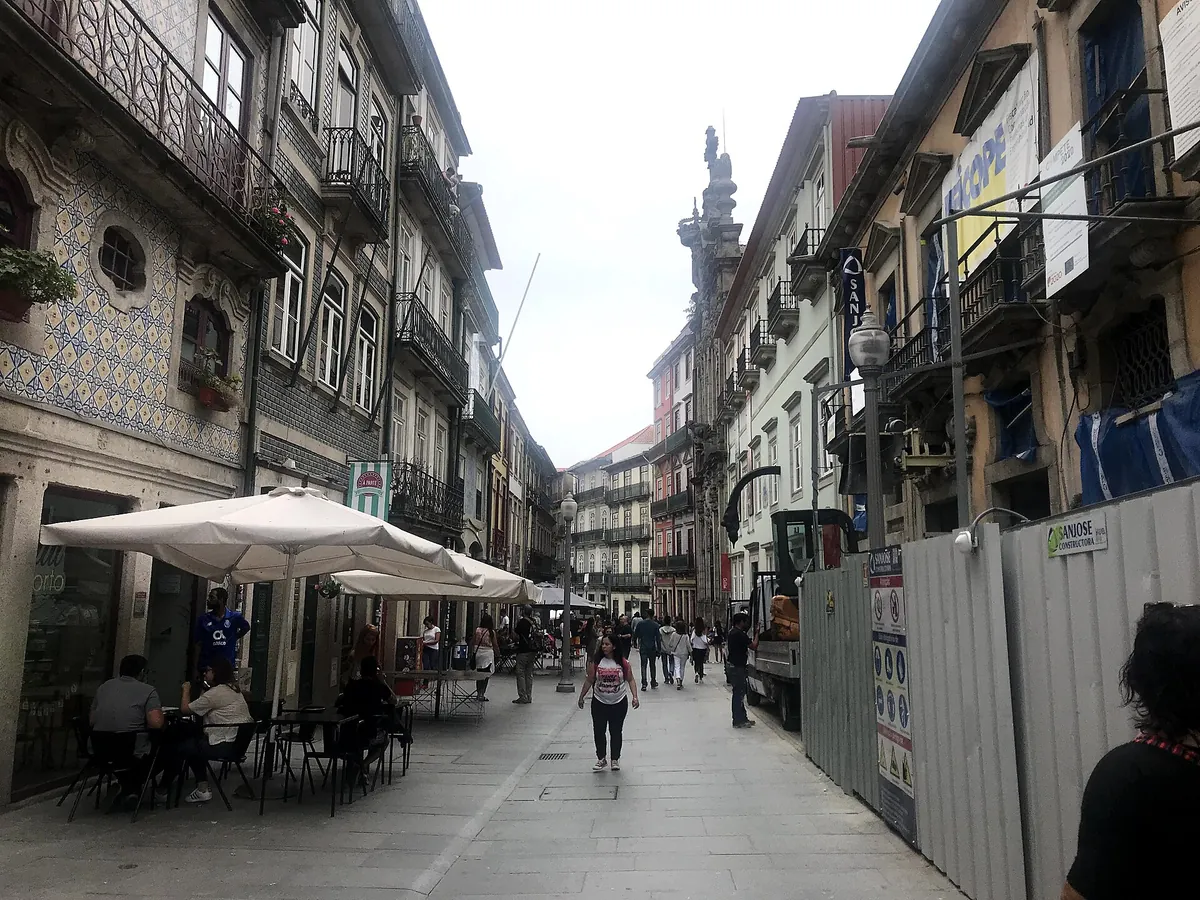
Image: -wuppertaler / Wikimedia Commons / CC BY-SA 4.0 (source); licensed image from the web. Photo not taken by the author.
Rua das Flores is a lovely old street for a stroll, lined with historic buildings, cafés and small shops. It's an easy detour on the way down from the old town to the river.
Palácio da Bolsa
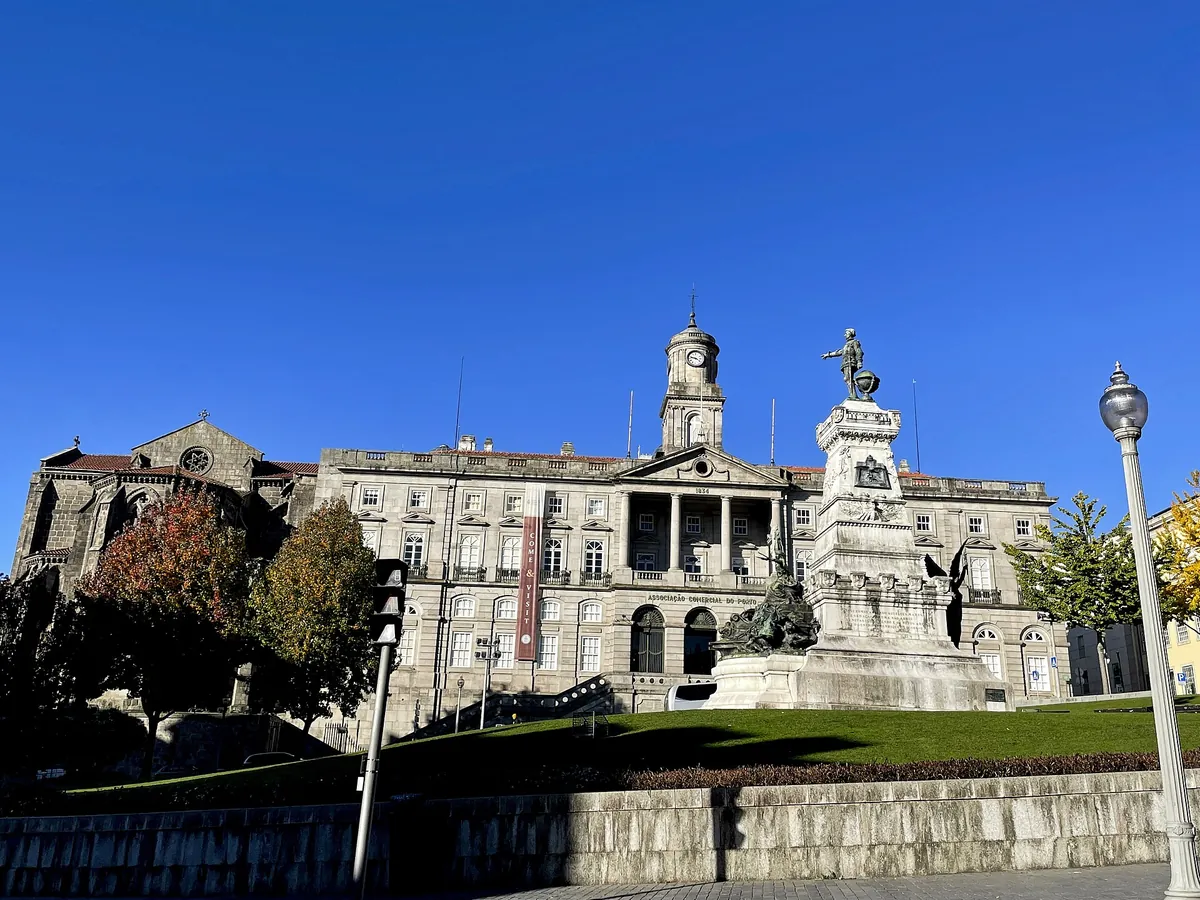
Image: Bex Walton / Wikimedia Commons / CC BY 2.0 (source); licensed image from the web. Photo not taken by the author.
We didn't go inside Palácio da Bolsa this time and only admired it from the outside. The Church of São Francisco is right next door, and that's where we decided to buy tickets and come back the next day for a proper visit (see Day 3).
The Ribeira riverfront and the Douro
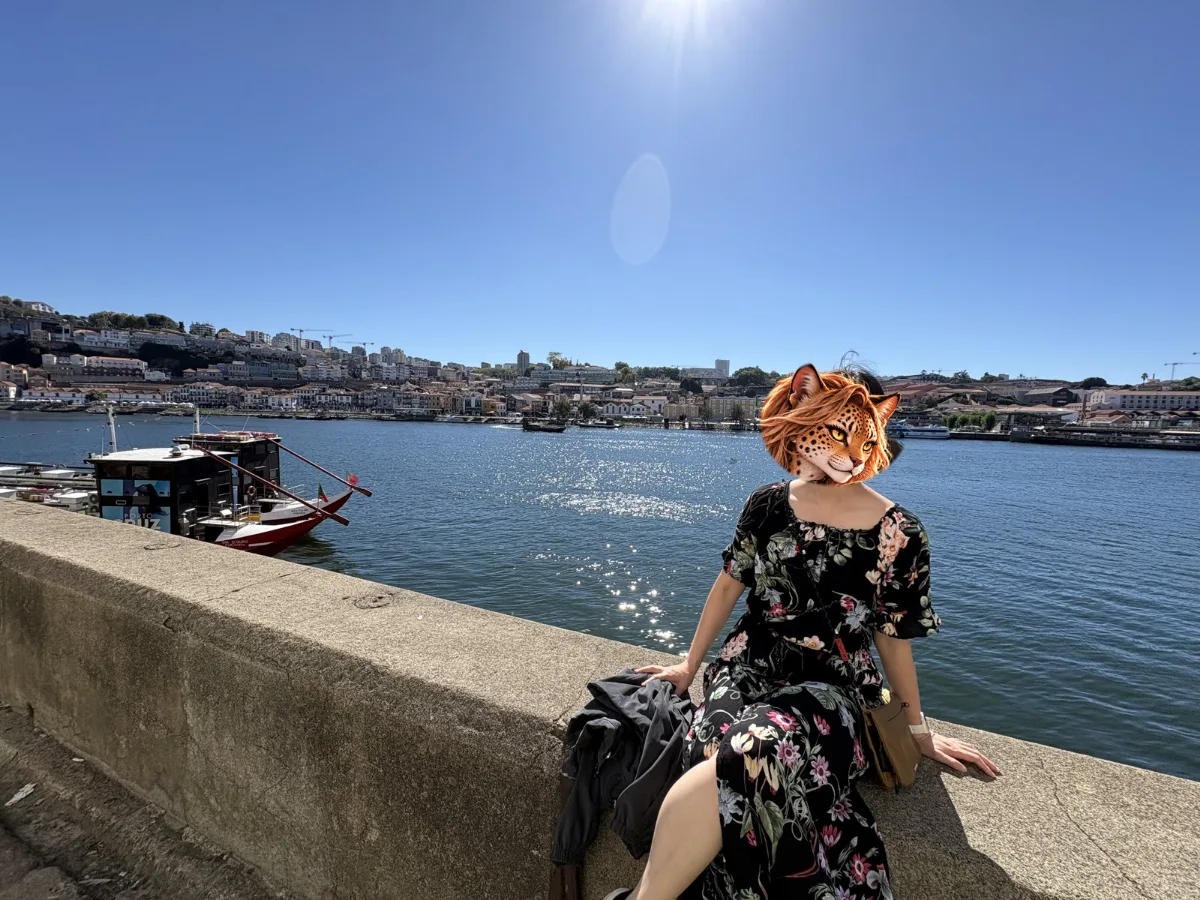
Taking a break on the low riverside wall, with traditional rabelo boats (Barco Rabelo) moored on the Douro behind. (Photo: TIME TRAVELER editor)
From there I walked all the way down to the Ribeira riverfront. Several rabelo boats loaded with wine barrels were moored on the river. These flat-bottomed wooden boats were once used to carry wine from the upper Douro down to Porto, and today they're one of the most iconic sights on the riverfront.
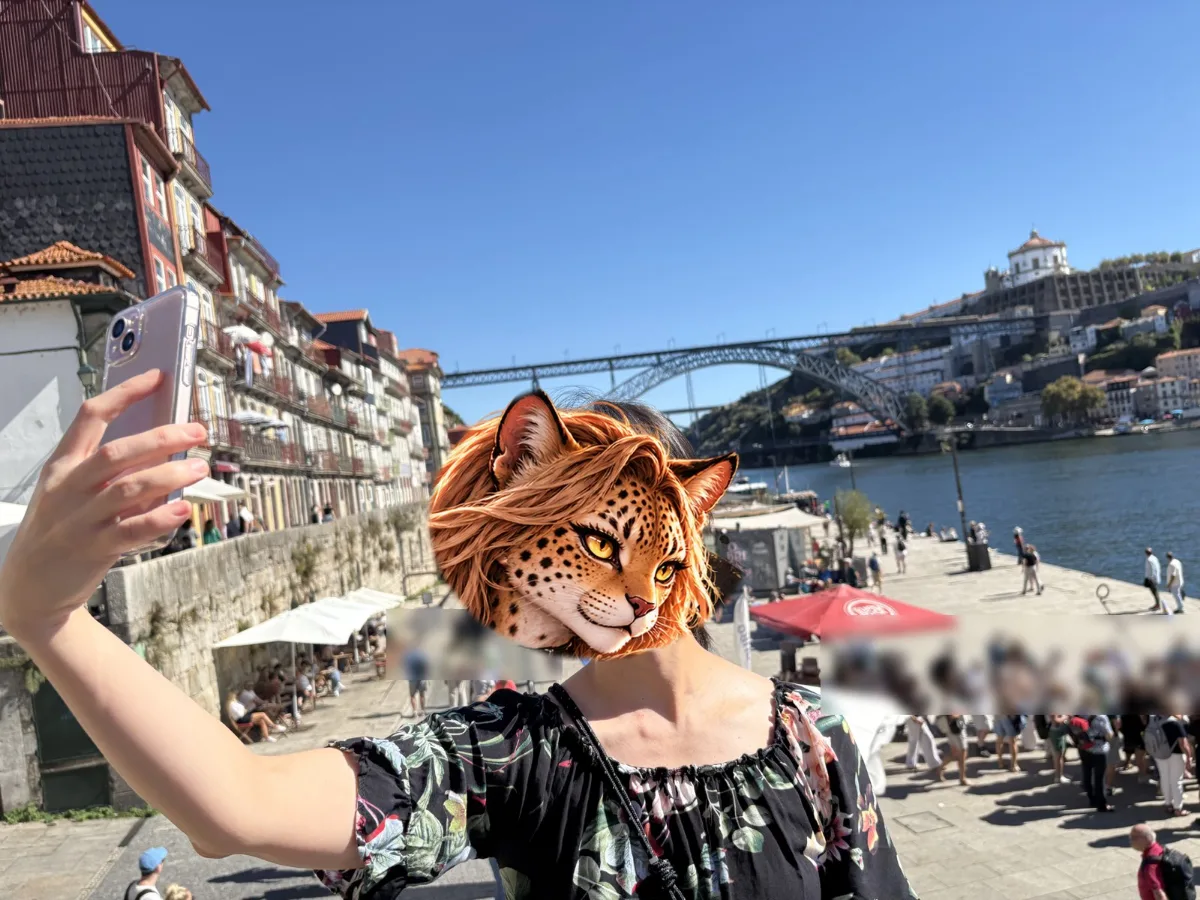
The crowded Ribeira riverfront, with the Luís I Bridge (Ponte Luís I) behind and the Serra do Pilar Monastery on the hill across the river. (Photo: TIME TRAVELER editor)
The Luís I Bridge opened in 1886. It was designed by Théophile Seyrig, an engineer who had worked with Eiffel, and its two iron decks link Porto with Vila Nova de Gaia on the opposite bank. The upper deck carries the metro and pedestrians. Since 2023 the lower deck is open by day only to pedestrians, bikes, public transport and taxis, with private cars allowed from 8 pm to 6 am, and walking across the upper deck gives you a view over the entire riverfront.
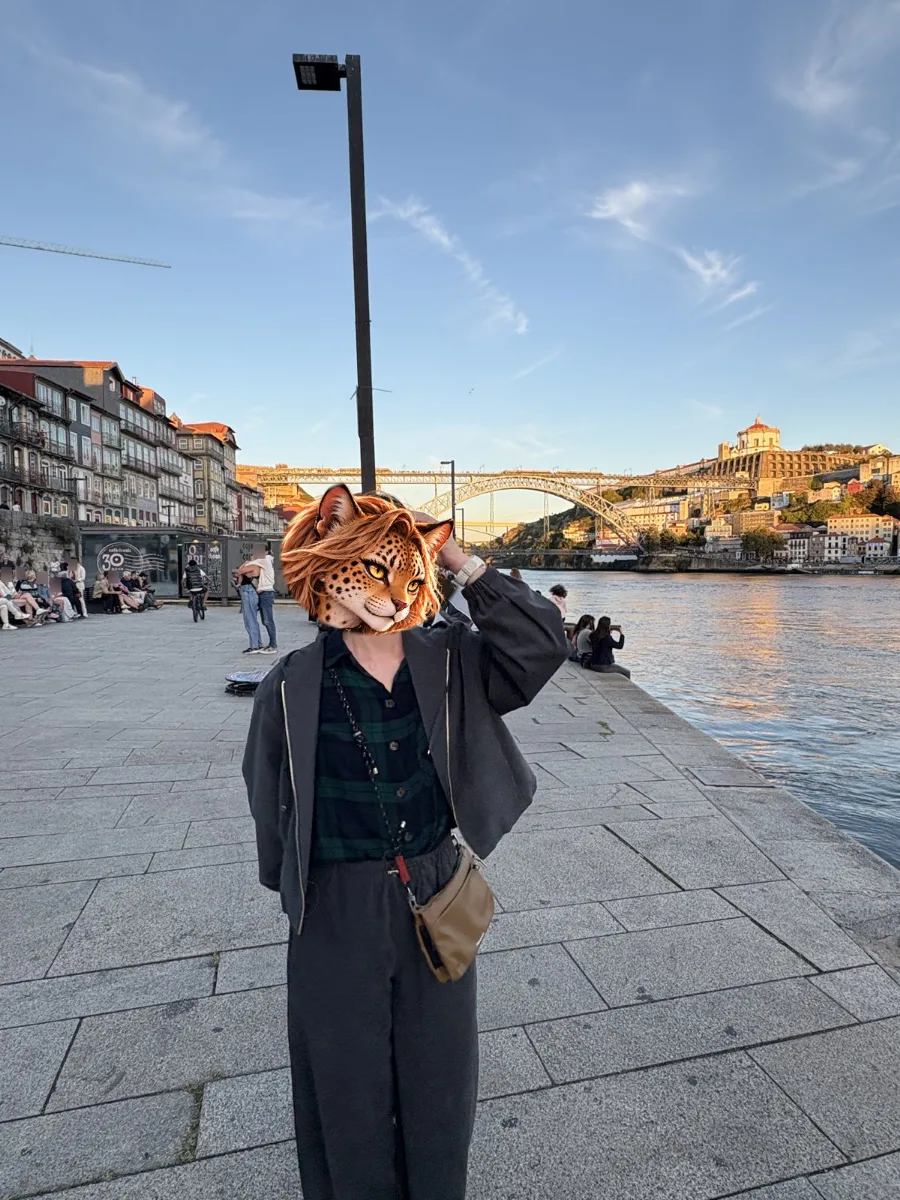
The Douro riverside in the evening, with the setting sun turning the hills across the river and the Luís I Bridge golden. (Photo: TIME TRAVELER editor)
I came back to the river again in the evening. The setting sun turned the bridge and the monastery across the river golden, and the riverbank was packed with people watching the sunset. Visiting once by day and once at dusk is the approach I'd really recommend.
We didn't take a boat trip this time and just walked along the bank to look at the bridges. If you'd like to see several of Porto's bridges from the water in one go, consider a Douro "six bridges" cruise.
Browse Porto tours and activities on Trip.com
Dinner: A Grade
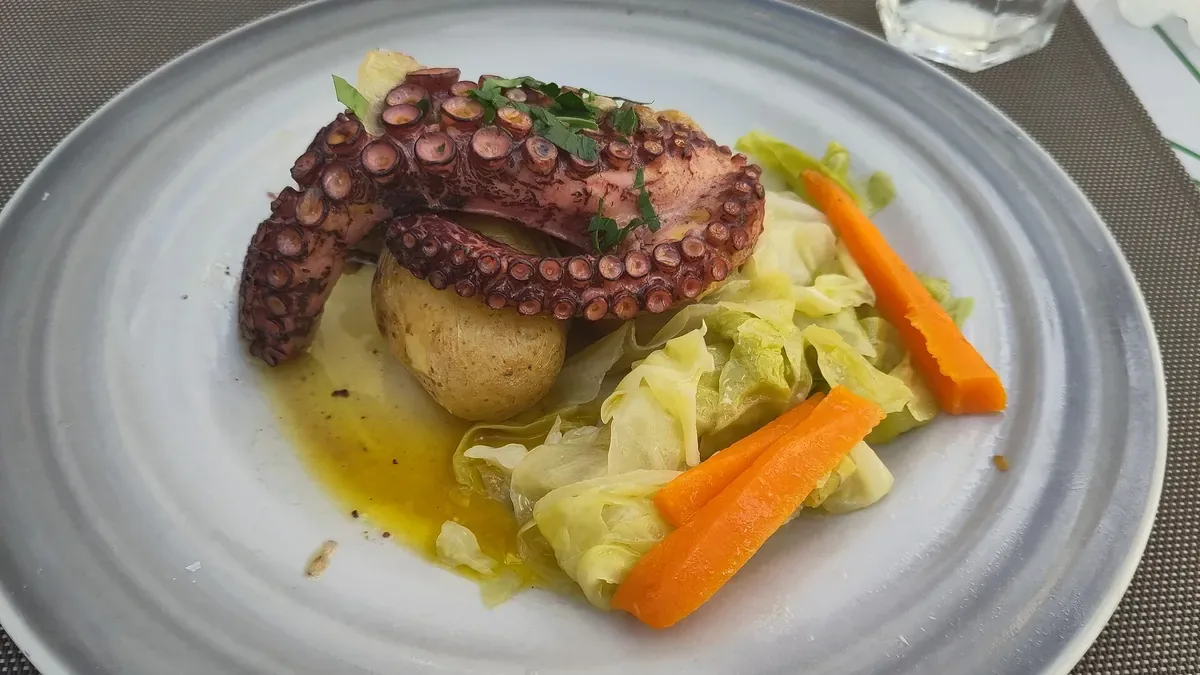
Image: Exilexi / Wikimedia Commons / CC BY 4.0 (source); illustrative photo of Portuguese grilled octopus. Photo not taken by the author, and not a dish from A Grade.
Dinner was at A Grade in Ribeira. The restaurant is near the river, although you can't actually see the water from the tables. The grilled octopus and seafood rice we ordered were both excellent, and I think it's better value than the restaurants that sell you a view.
5. Day 3 (Oct 10): An in-depth visit to the Church of São Francisco
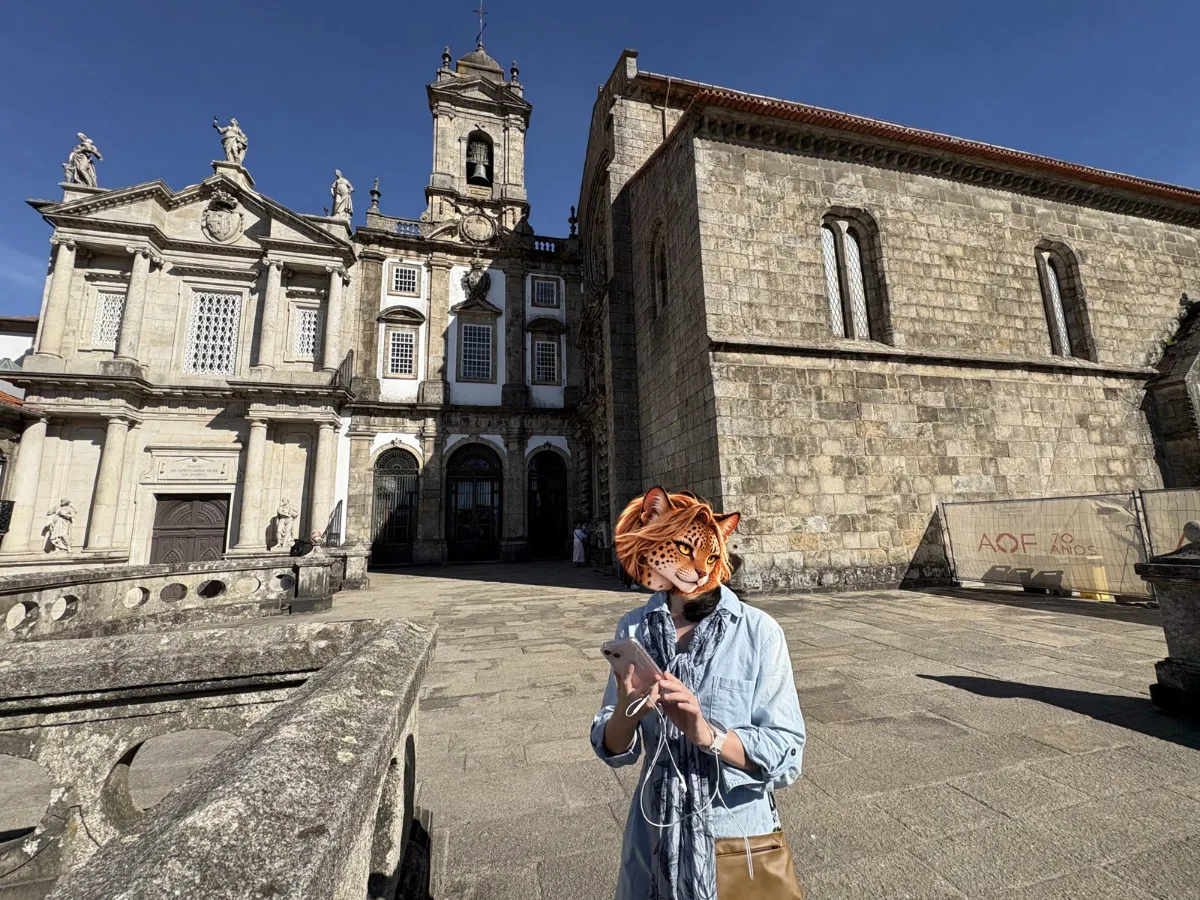
The square around the Church of São Francisco (Igreja de São Francisco); the grey stone building on the right is the Gothic main church. (Photo: TIME TRAVELER editor)
On the morning of day three I headed to the Church of São Francisco near Ribeira for a proper look inside. The exterior is plain, but the interior is famous for its lavish Baroque decoration of gilded wood carving. The contrast is striking, and it's one of the sights I'd most recommend in Porto.
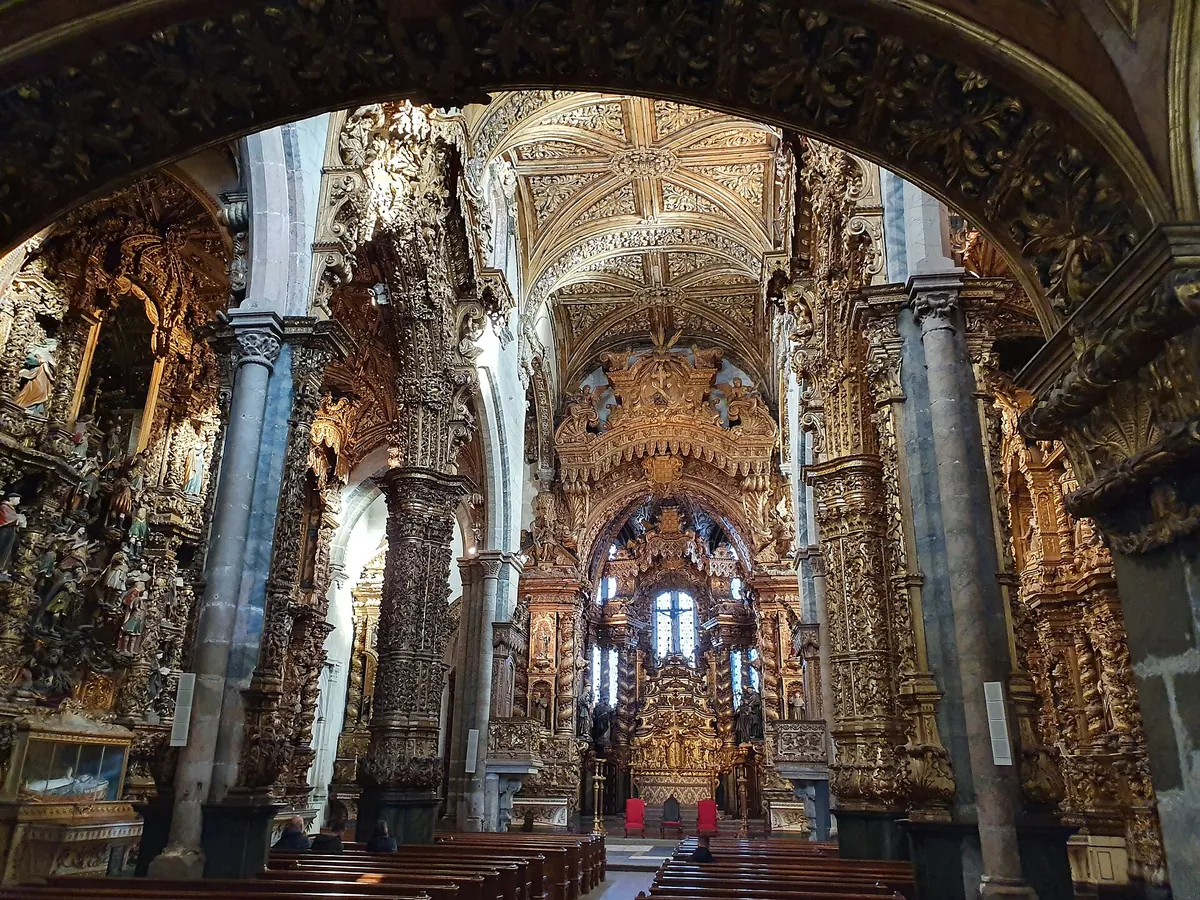
Image: GualdimG / Wikimedia Commons / CC BY-SA 4.0 (source); licensed image from the web. Photo not taken by the author.
Besides the church itself, the ticket also covers the Casa do Despacho museum next door (including the treasury and other rooms) and the catacombs. We spent two to three hours here, so if you like to take your time, allow plenty.
If you'd like a guide to explain the church's history, you could also look at guided tours that include the Church of São Francisco.
Browse Porto tours and activities on Trip.com
We racked up a staggering number of steps during these days, often more than 20,000, and by day three my feet were starting to ache.
Dinner: Bolhão a Gosto
Dinner was at Bolhão a Gosto – Comida Tradicional Portuguesa next to the market, where we ordered a whole grilled octopus, garlic prawns and seafood rice. In Portugal it's genuinely hard to go wrong with grilled octopus and seafood rice. As for the garlic prawns, I preferred the version at Penalva da Graça in Lisbon.
6. Day 4 (Oct 11): Capela das Almas, Gaia's wine cellars and the seaside at Foz
Capela das Almas
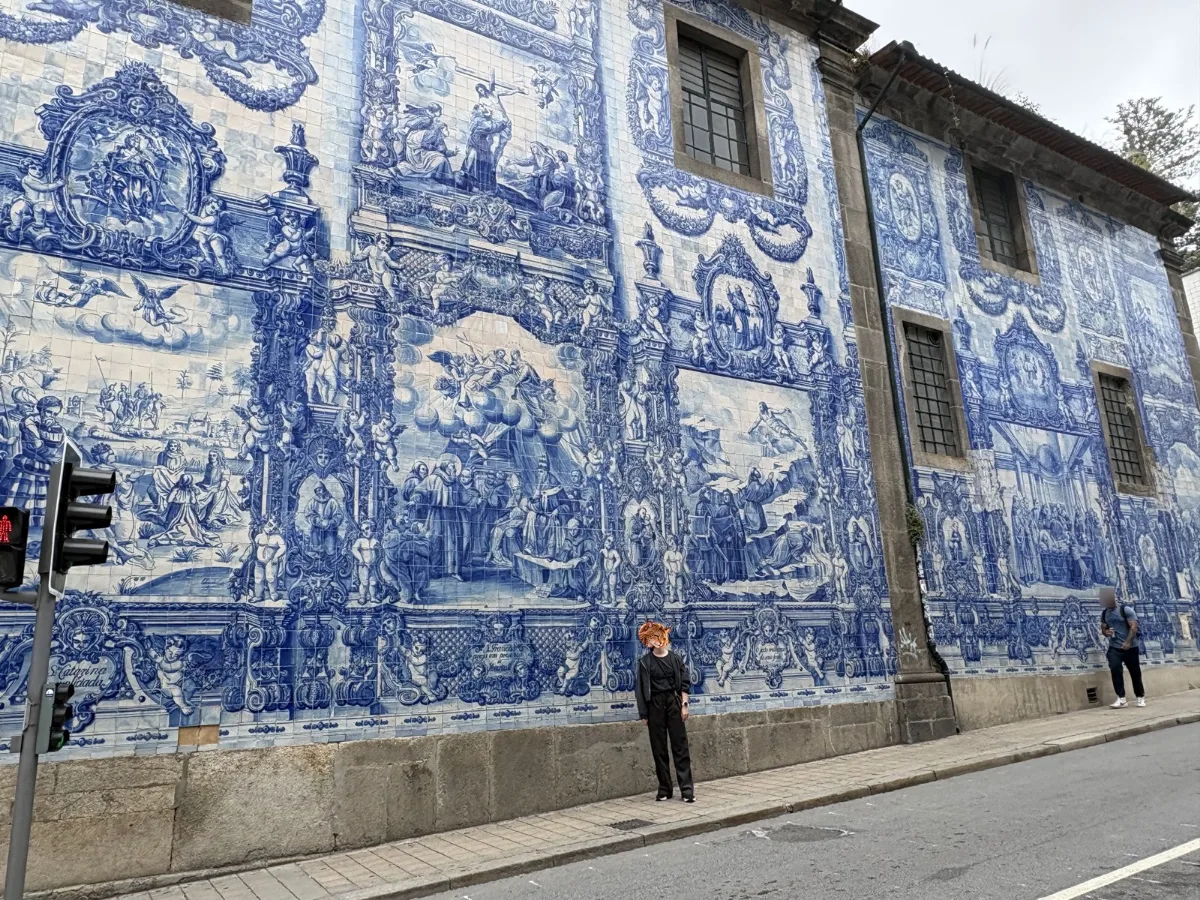
Capela das Almas on Rua de Santa Catarina, its entire exterior covered in blue-and-white tiles. (Photo: TIME TRAVELER editor)
We started the day on the shopping street Rua de Santa Catarina, walking north past a shopping centre to Capela das Almas on the corner. Its outer walls are covered in tiles painted by Eduardo Leite in 1929, depicting the lives of saints including St Francis and St Catherine, and it's a very popular photo spot. You'll need to stand on the pavement opposite to fit the whole wall in.
Port wine cellars in Vila Nova de Gaia
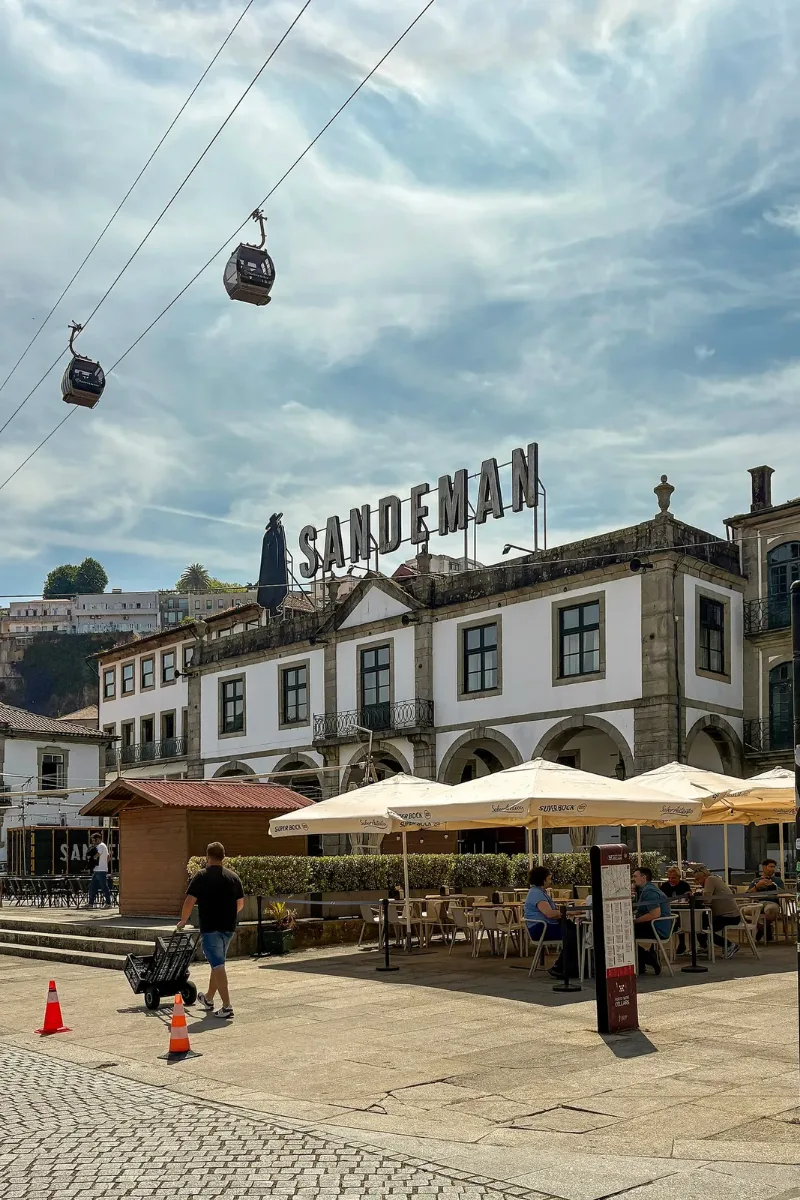
Image: Dale Cruse / Wikimedia Commons / CC BY 4.0 (source); illustrative photo of the Gaia cellar district. Photo not taken by the author.
Next we crossed the lower deck of the Luís I Bridge to Vila Nova de Gaia, where the port wine cellars are concentrated. We'd planned to join a cellar tour and tasting, but we couldn't find one we really liked, and they weren't cheap either, so in the end we skipped it. If you want to visit a cellar, I'd suggest researching and comparing what each tour includes before you go.
If you'd like to compare cellar tours and prices first, you can browse the options on Trip.com (prices are as shown on the page and may change).
Browse Porto tours and activities on Trip.com
Foz: from the Felgueiras Lighthouse to the seafront pergola
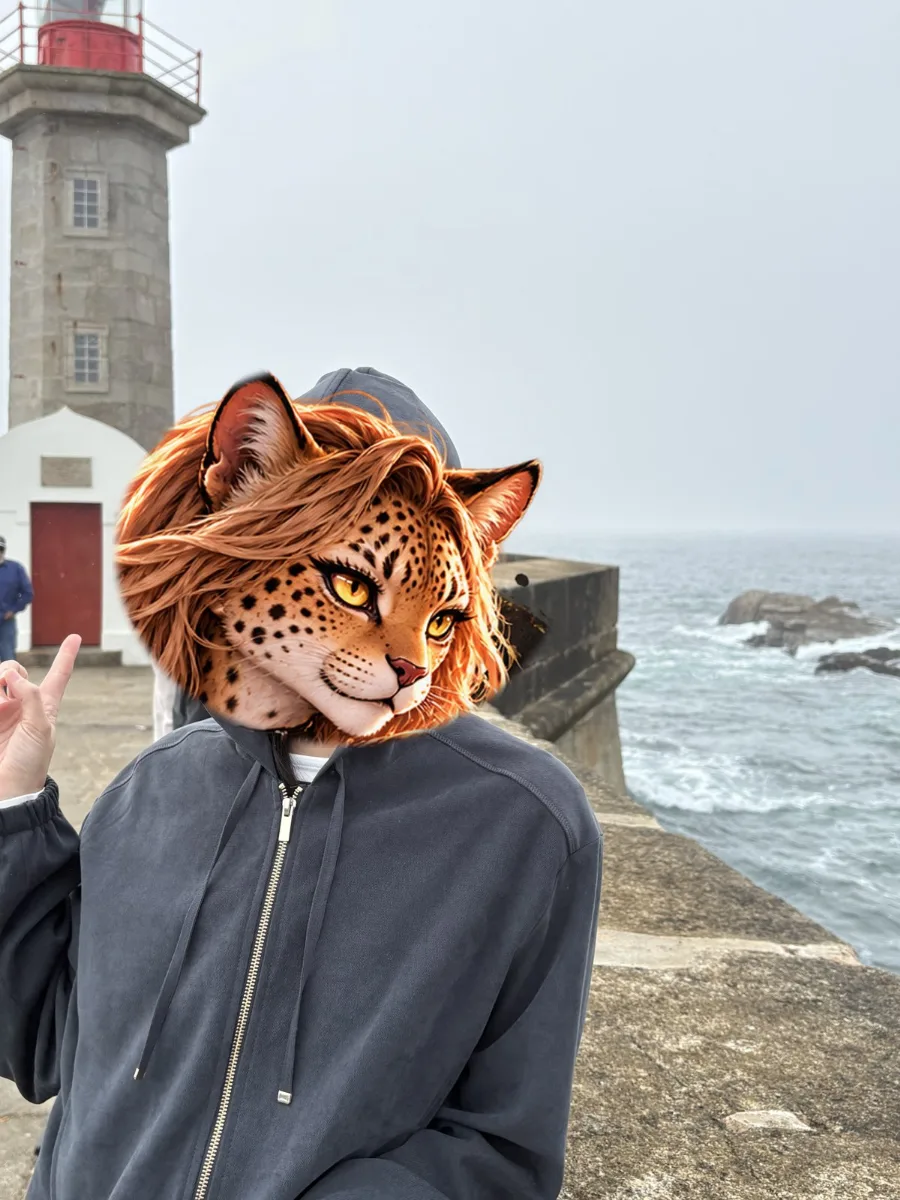
Felgueiras Lighthouse (Farol de Felgueiras) by the sea at Foz do Douro, with Atlantic waves crashing against the breakwater. (Photo: TIME TRAVELER editor)
In the afternoon we took a Bolt to Foz, where the Douro meets the sea. This was the only stretch of our Porto stay where we used a car. The little Felgueiras Lighthouse (Farolim de Felgueiras) at the end of the breakwater is the local landmark. It was very windy that day, and wave after wave crashed over the breakwater, which was spectacular to watch.
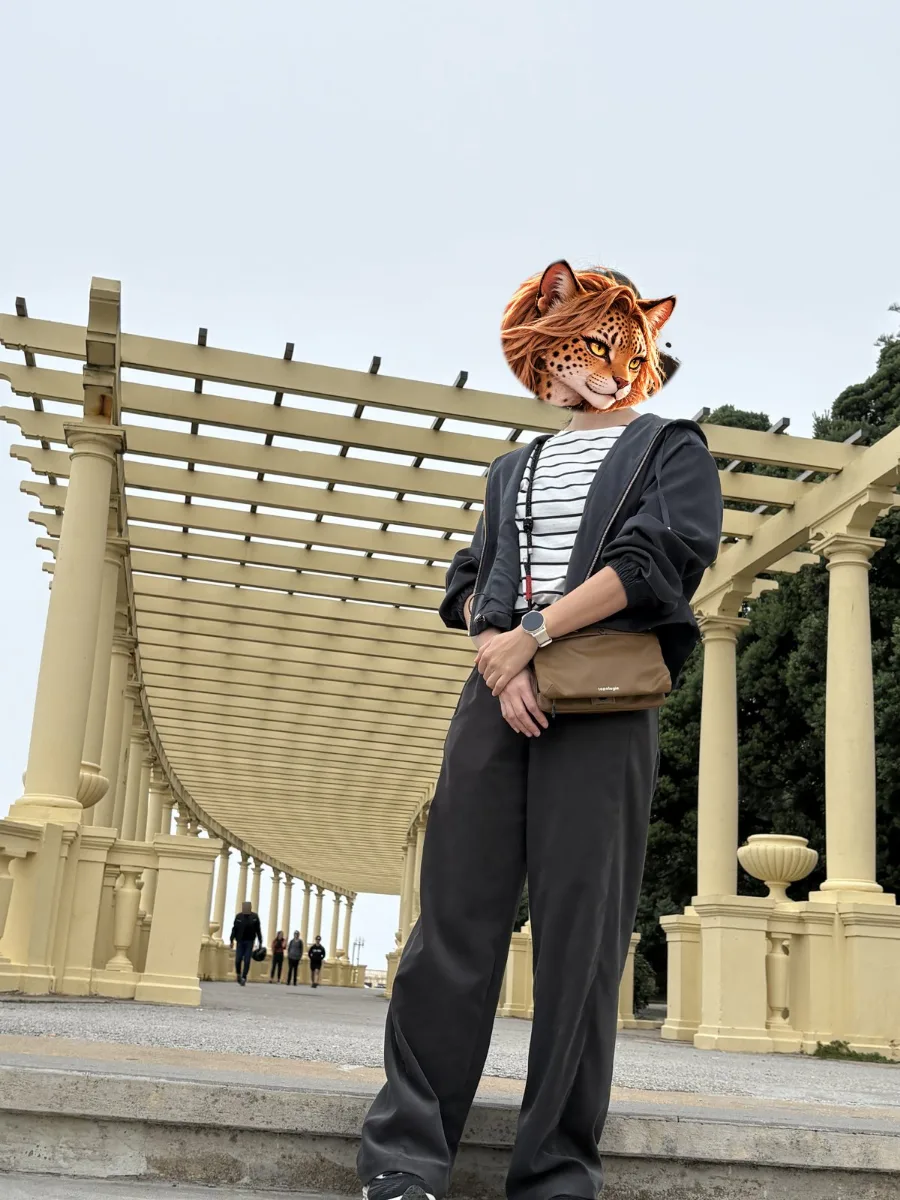
The cream-coloured Pérgola da Foz, its long colonnade stretching along the seafront. (Photo: TIME TRAVELER editor)
Walking along the seafront promenade from the lighthouse, you'll pass this elegant pergola. It's a great photo spot and a nice place to see another side of Porto beyond the city centre. Our feet were sore, though, so we didn't walk for long before taking a car back to rest.
Dinner: Pedro dos Frangos
Dinner was at Pedro dos Frangos, which I highly recommend! The grilled chicken and roast suckling pig were both delicious, and after several days of seafood, it was the perfect change of pace.
7. Days 5–6 (Oct 12–13): Breakfast at McDonald's Imperial and back to Lisbon
McDonald's Imperial
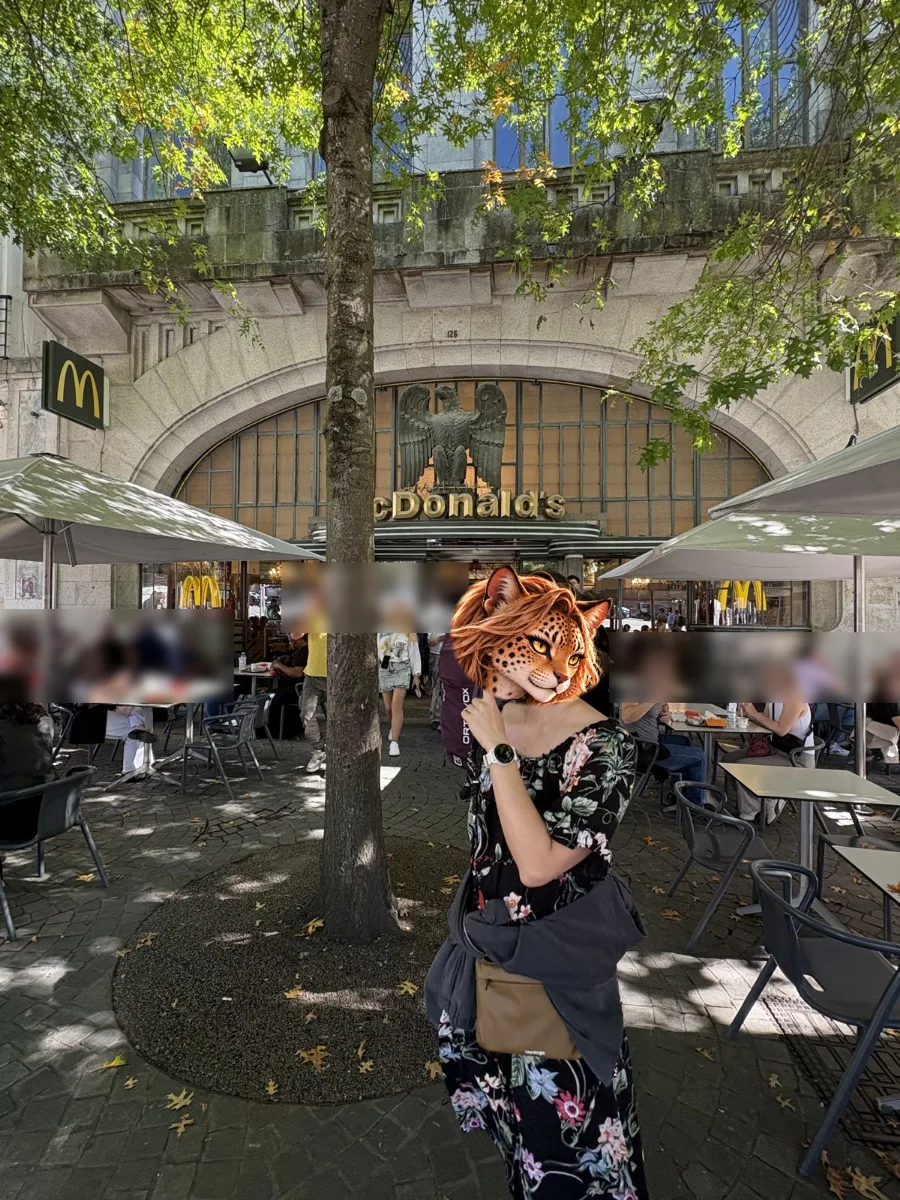
McDonald's Imperial next to Praça da Liberdade, with a huge eagle sculpture above the entrance. (Photo: TIME TRAVELER editor)
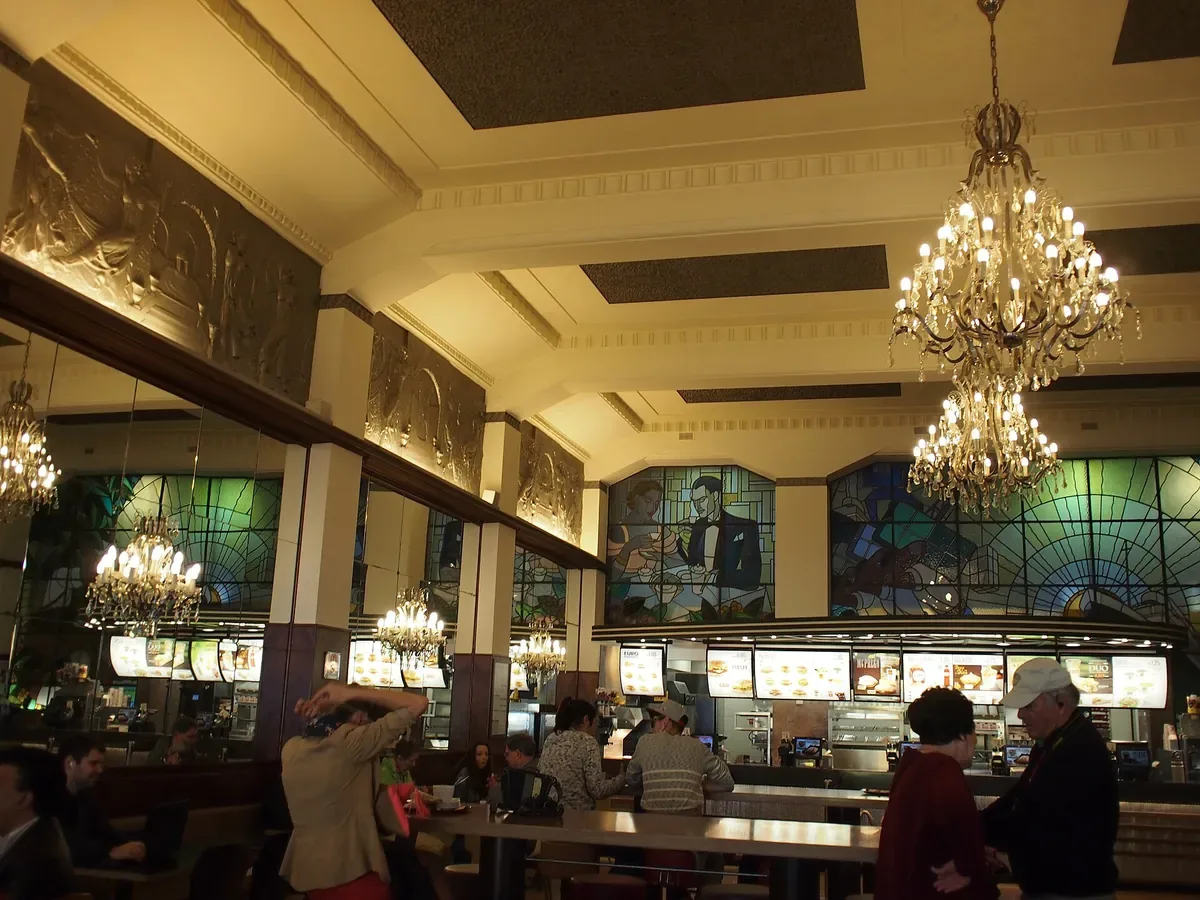
Image: yuka HAYASHI / Wikimedia Commons / CC BY 2.0 (source); licensed image from the web. Photo not taken by the author.
For our last breakfast before leaving Porto, we chose McDonald's Imperial, which many people call "the most beautiful McDonald's in the world". The building was originally Café Imperial, which opened in 1936, and it still has the eagle sculpture over the entrance along with the stained glass and crystal chandeliers inside. We ordered toast, which tasted like any other McDonald's. You really come here for the building.
After breakfast, we headed back to Lisbon.
Back in Lisbon: dinner at Alyonna Bliss (Lisbon)
By dinner on October 12 we were back in Lisbon, eating at Alyonna Bliss Restaurant And Bar. It serves a mix of cuisines, including Indian, Thai and Nepalese, with good food and generous portions.
On the morning of October 13 we had breakfast at a Starbucks in Lisbon. Familiar flavours, nothing special to report.
8. Porto food guide: where we ate
| Restaurant | City | What we ordered | My take |
|---|---|---|---|
| Café Santiago | Porto | Brazilian-style grilled meat set, francesinha | Huge portions, rich and on the salty side |
| Floresta Café by Hungry Biker | Porto | Brunch set | Highly rated and touristy, around €15–20, tasty but not cheap |
| A Grade | Porto | Grilled octopus, seafood rice | No river view from the tables, but better value than the view restaurants |
| Bolhão a Gosto | Porto | Whole grilled octopus, garlic prawns, seafood rice | Hard to go wrong with the octopus and seafood rice |
| Pedro dos Frangos | Porto | Grilled chicken, roast suckling pig | Highly recommended, a great break from seafood |
| Alyonna Bliss Restaurant And Bar | Lisbon | International dishes | Good food, generous portions |
If I could only recommend a few dishes, I'd pick grilled octopus, seafood rice and garlic prawns.
9. Getting around Porto: walking is enough, but come with strong legs
- Walking is enough in the centre: the sights are close together, and we barely used public transport in the city.
- The hills are tiring: in the historic centre it's downhill all the way from the station to the river and uphill all the way back, so try to plan your route to "go up first, then come down".
- Wear comfortable walking shoes: we regularly topped 10,000 steps a day, and several days went past 20,000.
- We only took a car to the mouth of the Douro: from the city centre to Foz, calling a Bolt or Uber saved our legs.
- Lisbon to Porto: Portuguese Railways (CP) runs trains between the two cities, and the journey takes around three hours. I'd recommend checking the timetable on the CP website in advance. Trip.com also sells train tickets, though you'll need to enter the departure and arrival stations yourself.
If you'd rather not tackle the hills on foot, a hop-on hop-off sightseeing bus can link the city-centre and riverside sights in one go.
Browse Porto tours and activities on Trip.com
We took the train from Lisbon to Porto this time. If you're flying in or out of Porto, an airport transfer can make things easier when you're carrying luggage.
Browse Porto transfers and activities on Trip.com
10. Practical tips for visiting Porto
- Stay in the centre: you can walk to most sights, and Casas do Rivoli is very conveniently located.
- Bolhão Market is worth a visit, ideally on your first day. Remember it's closed on Sundays.
- Buy your Livraria Lello tickets in advance, or you'll face a long queue.
- Allow plenty of time for the Church of São Francisco: we spent two to three hours there.
- The sunset from the Serra do Pilar viewpoint is highly recommended, and the outdoor viewpoint is free.
- Tile trail: São Bento Station, Carmo Church and Capela das Almas can all be admired from outside for free, and they link up nicely into one route.
- Sunset by the river: Ribeira and the Luís I Bridge are beautiful at dusk, but it gets crowded, so keep an eye on your belongings.
- Research and compare the Gaia cellar tours before you decide.
- Bring a windproof layer for the coast: Foz is windy with big waves, so take a windbreaker and watch out for spray near the breakwater.
- Don't pack your days too tightly. Leave time to rest your feet.
11. How is Porto different from Lisbon?
To me, Porto felt more like a tourist city, although that might have something to do with where we stayed. Porto isn't big, and its sights are concentrated and walkable. The downside is that it's very hilly, and all the ups and downs are tiring.
If you love historic architecture, blue-and-white tiles and riverside scenery, three to four days in Porto is ideal. For me, Porto is at its most beautiful from the Luís I Bridge, from the Serra do Pilar viewpoint, and when you look back at the whole city from the banks of the Douro. It was one of the most memorable stops of our trip to Portugal.
12. Porto travel FAQ
Q1: How many days should I spend in Porto?
We stayed five days and four nights. If you enjoy historic architecture, tiles and riverside scenery, three to four days is enough for a full and rewarding visit.
Q2: Where is the most convenient area to stay in Porto?
I'd recommend the city centre. Casas do Rivoli, where we stayed, is near the City Hall square, within easy walking distance of the market, São Bento Station and the old town.
Q3: Do I need to buy Livraria Lello tickets in advance?
Yes. You need a ticket to get into Livraria Lello. We didn't buy ours in advance and ended up only seeing it from outside. Check the booking options on the official website first.
Q4: Is there an entrance fee for the Serra do Pilar viewpoint?
The outdoor viewpoint is free, and you can walk there from the Luís I Bridge. Visiting the interior of the neighbouring monastery costs extra; please check the official information for opening hours.
Q5: Do I need to use transport in central Porto?
Walking is enough in the city centre. We only called a Bolt or Uber to get to the seaside at Foz. Porto is very hilly, so be sure to wear comfortable walking shoes.
13. Final thoughts: getting to know Porto on foot
Porto isn't big, but every stretch of the way has something to see: the market, tiles, churches, the riverfront, sunsets and the sea. My feet ached at the end of every day, but watching the sun set over the Douro from Serra do Pilar made it all worth it.
Previous post: Portugal Travelogue: Lisbon + Sintra – Belém Tower, Jerónimos Monastery, Santa Justa Lift and Pena Palace (Part 1)
Image credits: photos marked "Photo: TIME TRAVELER editor" were taken by our editor, with faces covered by the editor's own character stickers. Images marked Wikimedia Commons are licensed images from the web and were not taken by the author; see each caption for the author and licence. This site has only resized them and converted them to WebP.
Travel info and affiliate disclosure: some links in this article are Trip.com affiliate links. If you browse or book through them, this site may earn a commission under the platform's rules, at no extra cost to you. The accommodation, restaurant reviews and travel impressions shared here are based on the author's own trip in October 2026. Images marked Wikimedia Commons are licensed images from the web and were not taken by the author. Ticket prices, opening hours and transport information can change, so please check the latest official information.
Sources and notes
[Sources and notes] Last verified 2026-11-03 - Dates and places: photo timestamps and location data, plus the author's travel notes - Historic Centre of Porto: inscribed on the UNESCO World Heritage List in 1996 - São Bento Station tiles: painted by Jorge Colaço, around 20,000 tiles - Luís I Bridge: opened in 1886, designed by Théophile Seyrig - McDonald's Imperial: formerly Café Imperial, opened in 1936 (Porto Commercial Association records) - Capela das Almas exterior tiles: painted by Eduardo Leite in 1929 - Livraria Lello ticketed entry, Bolhão Market closed on Sundays, and what the Church of São Francisco ticket covers: per each official website (checked 2026-11-03) - Restaurant reviews, accommodation impressions and amounts spent reflect the author's personal experience
Verified on:2026-11-03
Comments (0)
No comments yet.
Comments are published first and reviewed afterwards; rule-breaking comments are hidden. Only signed-in members can comment.