Lisbon + Sintra Itinerary: 6 Days in Portugal – Belém Tower, Pena Palace, Quinta da Regaleira
A 6-day, 5-night Lisbon + Sintra itinerary from our trip in October 2026: Belém Tower, Jerónimos Monastery, Pena Palace, Quinta da Regaleira, custard tarts and seafood restaurants, with Bolt/Uber and metro costs, where to stay, ticket booking tips and Trip.com booking links.
This article was submitted by a member. Views and content are the author’s own and do not represent this site.
This article contains commercial links (affiliate or paid) that may earn the author a commission.
If it's your first trip to Portugal, Lisbon is well worth at least 4 to 5 days. The city has charming red rooftops, blue-and-white tiles, historic trams, steep cobbled streets, and unforgettable custard tarts and seafood.
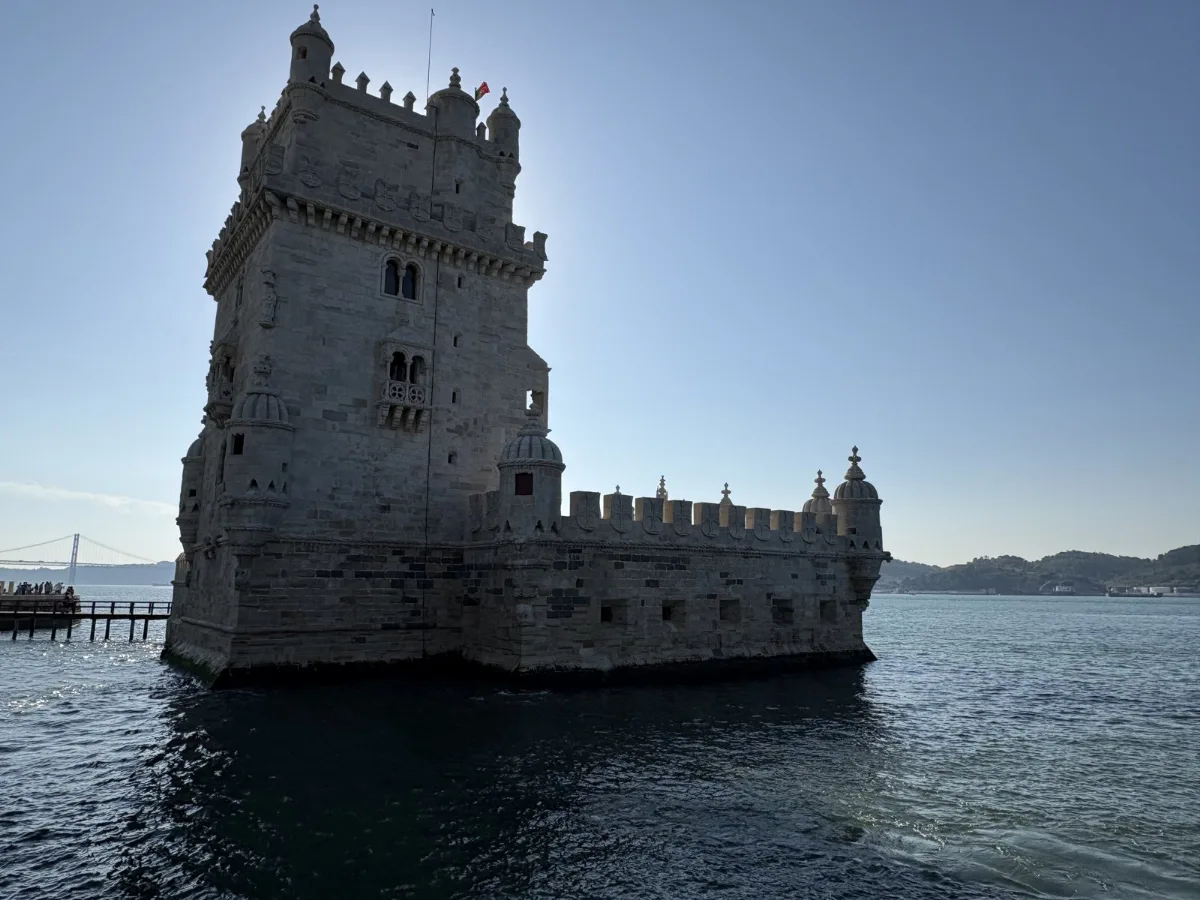
Belém Tower (Torre de Belém) standing by the Tagus (Tejo), with the early morning light bringing out every layer of the stone tower. (Photo: TIME TRAVELER editor)
This time we spent October 3 to October 8, 2026 in Lisbon and Sintra. After flying into Lisbon with Emirates, we took a Bolt to our guesthouse, then spent the next few days slowly exploring Belém, the old Alfama quarter, central Lisbon and nearby Sintra.
What impressed me most on this trip wasn't only world-famous sights like Belém Tower and Pena Palace, but also a few restaurants that turned out to be surprisingly good. The seafood rice and garlic prawns at Penalva da Graça were so good that we went back a second time within just a few days, while the red prawns and tiger prawns at the famous seafood restaurant Cervejaria Ramiro were a completely different kind of food experience.
Getting around was easier than I expected, too. Bolt and Uber rides in Lisbon are quite affordable, and you can even pay for the metro by tapping Apple Pay.
This post covers our full 6-day itinerary, food impressions, transport costs, where we stayed, attraction tickets and booking tips. If you're planning a trip to Portugal, I hope our first-hand experience helps you avoid a few detours.
1. Lisbon + Sintra itinerary at a glance: 6 days, 5 nights
We used Lisbon as our base the whole time and set aside one day for Sintra. Since we never had to change accommodation, getting around felt relatively relaxed.
| Date | Itinerary | Highlights |
|---|---|---|
| Oct 3 | Arriving in Lisbon | Emirates, Bolt, guesthouse, Penalva da Graça |
| Oct 4 | Belém + Alfama | Custard tarts, Belém Tower, Monument to the Discoveries, bifana, viewpoints |
| Oct 5 | Lisbon's old town | Rossio, Rua Augusta, Santa Justa Lift, Time Out, Ramiro |
| Oct 6 | Sintra day trip | Pena Palace, Quinta da Regaleira |
| Oct 7 | Belém + LX Factory | Jerónimos Monastery, LX Factory, second visit to Penalva da Graça |
| Oct 8 | Lisbon to Porto | CP train Alfa 125 |
One small trick in this plan: book the sights that need a timed entry first, and keep everything else flexible.
For example, we had already booked entry to the Belém monastery for October 7, so when we went to Belém on October 4 we only planned to see the exteriors and the surrounding sights, with no need to rush through a visit.
If you'd rather not research transport, tickets and itineraries yourself, you can also book a Lisbon or Sintra day tour and let a local guide handle the transport and sights.
Browse Lisbon tours and activities on Trip.com
2. Arriving in Lisbon: a Bolt from the airport to our guesthouse
Oct 3: Flying into Portugal with Emirates
We flew to Portugal with Emirates. After landing in Lisbon, we didn't bother looking into the airport bus or the metro and simply took a Bolt to our guesthouse.
We stayed around Morais Soares 131, a residential area on the east side of central Lisbon.
After a short rest, we went to nearby Penalva da Graça for dinner.
Discovering the best seafood rice of the trip
On the first night we picked Penalva da Graça. We were only looking for somewhere near our accommodation, and it ended up becoming one of our favourite restaurants of the whole Portugal trip.
The seafood rice here is highly recommended. The rice soaks up all the flavour of the seafood broth, and the whole dish is rich and very satisfying.
Another dish that left a big impression was the garlic prawns. The garlic aroma really stands out, and paired with the sweetness of the prawns it was genuinely amazing.
Best of all, prices here are fairly reasonable, without the pressure of a famous tourist restaurant's bill.
We even came back for a second meal later on.
If you're visiting Lisbon, you don't have to chase the most famous restaurants online for every meal. Sometimes a small place near where you're staying turns out to be the biggest surprise.
Restaurant info:
- Restaurant: Penalva da Graça
- Recommended dishes: seafood rice, garlic prawns
- My verdict: my favourite seafood rice of the trip, worth a second visit.
3. A day in Belém: custard tarts, Belém Tower and seafaring history
Oct 4: An early start at the home of the custard tart, Pastéis de Belém

Custard tarts (pastel de nata) with a cup of coffee at Pastéis de Belém, with blue-and-white tiled walls that feel completely Portuguese. (Photo: TIME TRAVELER editor)
In Lisbon, custard tarts are pretty much a must-eat.
We headed to Belém early in the morning, and our first stop was the famous Pastéis de Belém.
Founded in 1837, it's one of Portugal's most iconic custard tart shops, and both its traditional recipe and its history are linked to the nearby Jerónimos Monastery.
We tried custard tarts from quite a few shops on this trip, but this one was still my personal favourite.
The pastry is incredibly flaky, so much so that you can hear a clear "crunch" when you bite into it, and the filling is a warm custard cream. Together they're delicious.
A warm tart is already very good, but what really stayed with me was the texture of the flaky crust.
If you want to come here too, I recommend arriving early to avoid the tourist crowds after midday.
Pastéis de Belém:
- Address: Rua de Belém 84-92, Lisboa
- Must-try: Pastel de Belém
- Tip: go in the morning to cut down on queueing.
Belém Tower (Torre de Belém): one of Lisbon's most iconic landmarks
After our tarts, we strolled slowly through Belém.
Belém Tower (Torre de Belém) is one of Lisbon's most iconic historic buildings. It stands on the bank of the Tagus and was built in the early 16th century.
The tower originally served to defend and guard the port, and it is also an important symbol of Portugal's Age of Discovery.
Standing on the riverbank and seeing it in person is truly impressive.
It isn't just a plain stone tower: the walls are covered in very fine decoration, and together with the riverside scenery the whole thing is spectacular.
That day we only admired Belém Tower from the outside and didn't go in.
It's also a popular spot for taking classic Lisbon photos, so if the weather is good it's well worth lingering a little longer.
Monument to the Discoveries (Padrão dos Descobrimentos)
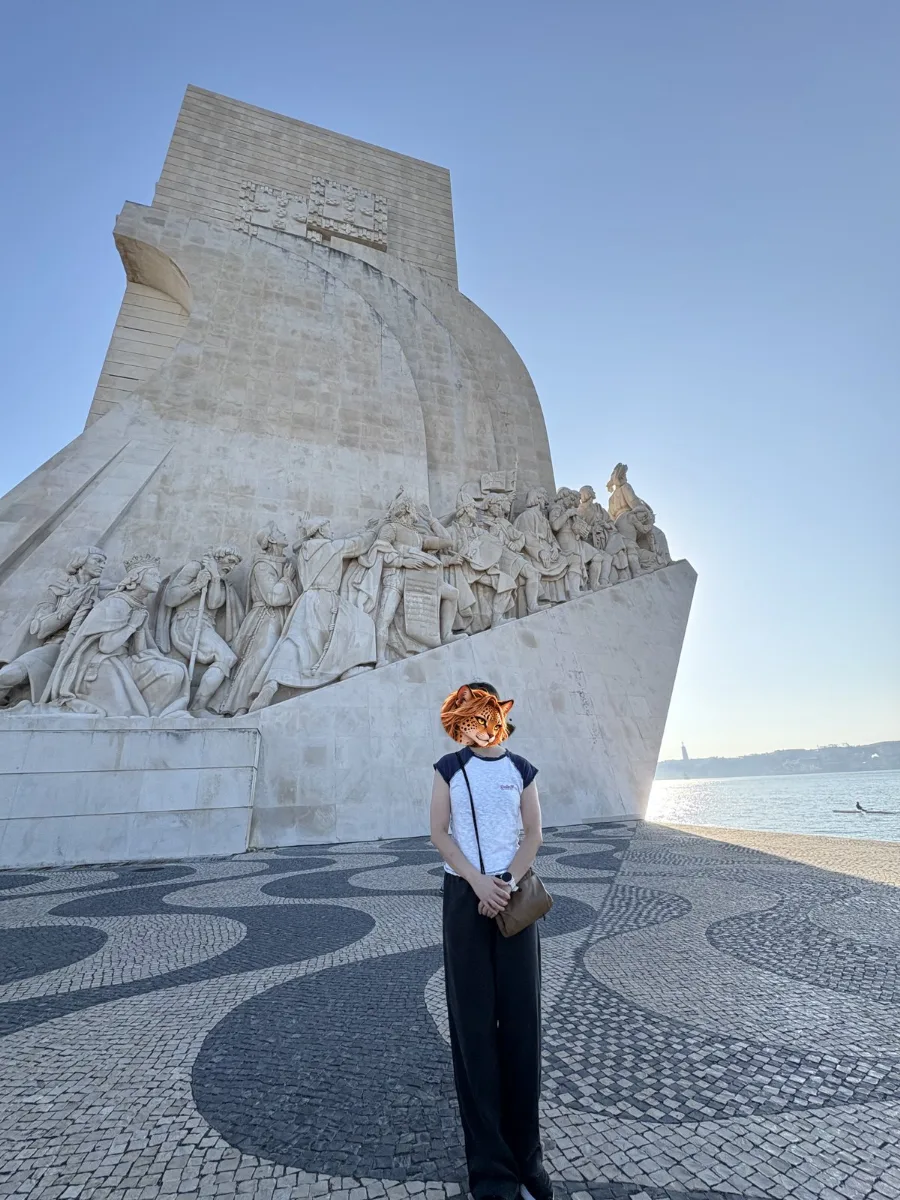
The Monument to the Discoveries (Padrão dos Descobrimentos), a ship's prow carved with figures from the Age of Discovery, above the classic Portuguese black-and-white cobbled pavement. (Photo: TIME TRAVELER editor)
Walking back along the river from Belém Tower, you come to another important sight: the Monument to the Discoveries.
Shaped like the prow of a ship, the monument honours key figures of Portugal's Age of Discovery, with Prince Henry the Navigator at the very front.
Lined up along it are many people connected with Portugal's seafaring history, symbolising the country's exploration of the oceans at the time.
The ground in front of the monument also has a large world map mosaic, which is worth a look while you're there.
Tips for planning your time in Belém
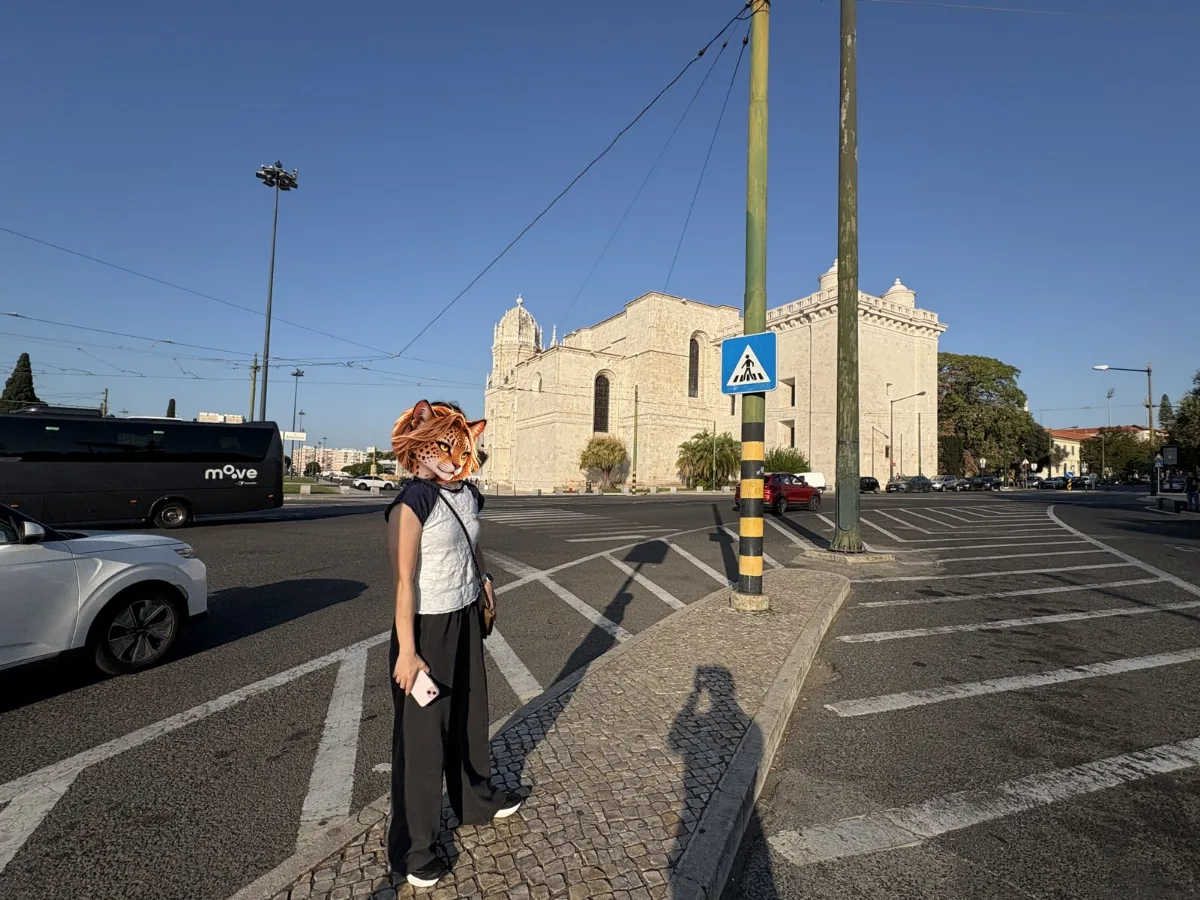
The white stone buildings on the west side of Jerónimos Monastery (Mosteiro dos Jerónimos), with the street still quiet in the morning. (Photo: TIME TRAVELER editor)
Belém Tower, the Monument to the Discoveries, Pastéis de Belém and Jerónimos Monastery are all in the same area, so you can link them up on foot.
This time, though, we had already booked our monastery visit for October 7, so on the first day we only looked at the exteriors.
If you want to visit the monastery cloisters and Belém's other sights in one go, I recommend sorting out your entry time slots in advance.
Browse Lisbon tours and activities on Trip.com
4. Back to the old town: bifanas, Alfama and viewpoints
Lunch: a Portuguese pork sandwich at Bifana do Bairro
Around noon we took a Bolt back to Lisbon's old town and looked for somewhere to have lunch.
We picked Bifana do Bairro.
The bifana is one of Portugal's classic street foods: marinated pork in a bread roll, with sauce and seasoning.
It looks simple, but it has a lot of character.
If you want to try inexpensive local Portuguese snacks, a bifana is well worth it.
An afternoon wander through Alfama
After lunch we spent the afternoon wandering slowly around Lisbon's old quarter.
Alfama is one of Lisbon's oldest neighbourhoods. Unlike the neat grid of the Baixa, it's full of winding cobbled lanes, stairways and narrow alleys.
As you walk, you keep coming across red rooftops, blue-and-white tiles and viewpoints from different angles.
This isn't really a place to rush, because the terrain is very hilly and many spots involve climbing.
Wear comfortable shoes and take your time walking and taking photos.
BEHER LISBOA: worth a try for Iberian ham lovers
In the afternoon we also had an Iberian ham sandwich at BEHER LISBOA.
Both Portugal and Spain have a rich ham culture, and Iberian ham is something many travellers make a point of tasting on the Iberian Peninsula.
This kind of ham is usually known for its rich flavour, the aroma of its fat and its cured taste.
If you like ham, cheese and bread, you can add this stop to a food crawl around the old town.
Lisbon's viewpoints: red rooftops from different angles

The large blue-and-white tile (azulejo) wall around the Miradouro de Santa Luzia, with our editor standing in front for scale. (Photo: TIME TRAVELER editor)
There are quite a few viewpoints around Alfama, and this time we visited all the main ones nearby.
The Miradouro de Santa Luzia is particularly distinctive. Besides views of Lisbon's red rooftops and the river, it's surrounded by beautiful blue-and-white tile decoration.
It's also one of the best places in Lisbon for photos.
If you have time, you can stroll from one nearby viewpoint to the next without planning a complicated route.
5. A day in Lisbon's old town: Santa Justa Lift, Rua Augusta and a seafood feast
Oct 5: Starting a walk through central Lisbon from Rossio
Today was all about walking around central Lisbon.
We started at Rossio (Rossio Square) and walked slowly through the city centre, past Rua Augusta, the Santa Justa Lift, the triumphal arch and Praça do Comércio.
This is one of Lisbon's liveliest areas, with lots of shops, cafés and restaurants on both sides of the streets.
Unlike Alfama, the streets here are wider and the buildings are more uniform.
Santa Justa Lift (Elevador de Santa Justa)
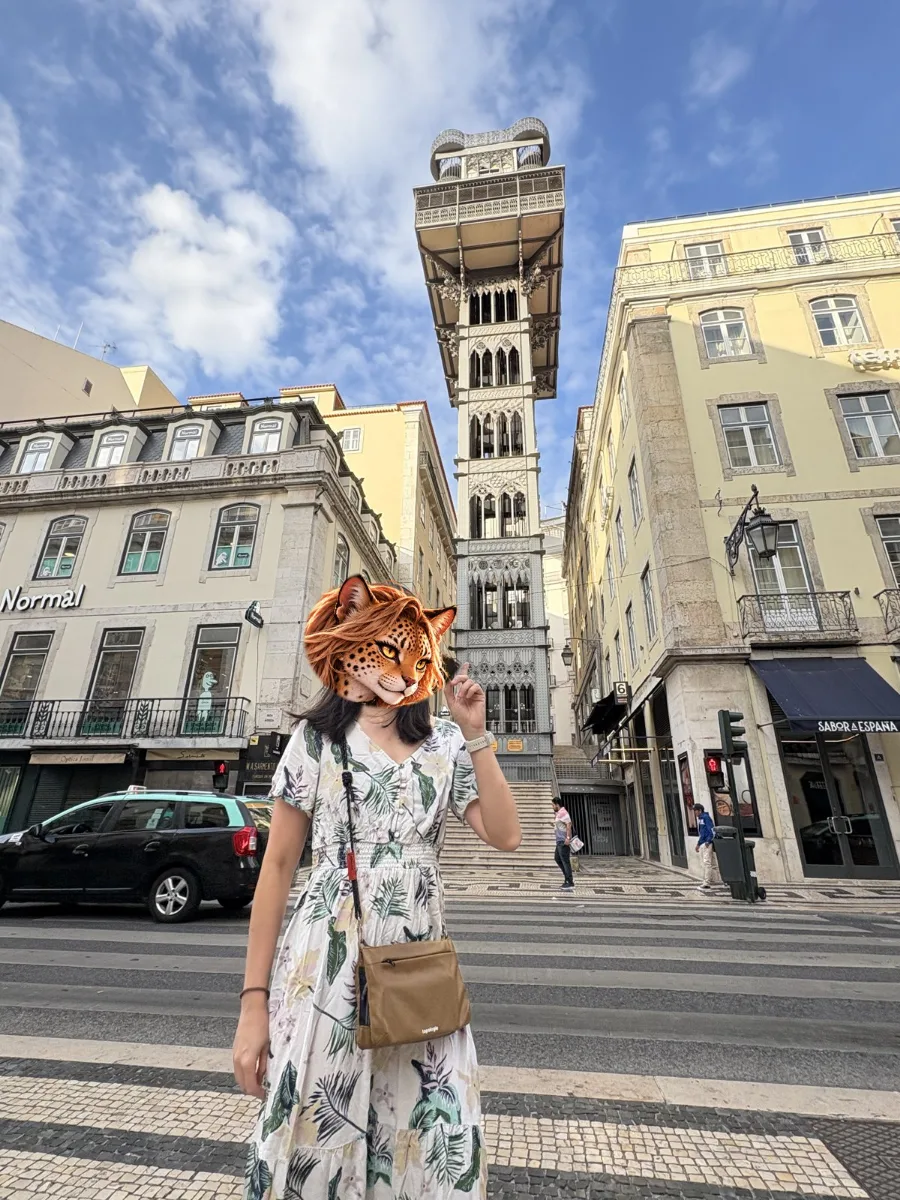
The Santa Justa Lift (Elevador de Santa Justa), a cast-iron neo-Gothic tower squeezed between the buildings of the Baixa. (Photo: TIME TRAVELER editor)
The Santa Justa Lift is a famous Lisbon landmark. The whole structure is made of cast iron and looks very distinctive.
Built in the early 20th century, it was originally meant to solve the problem of getting between the Baixa and the higher neighbourhoods above it.
When we visited, however, it happened to be under maintenance, so we couldn't ride it.
Luckily there are other walking routes nearby: you can walk from the Carmo area up to the viewing platform at the top and still enjoy the views over Lisbon.

Walking up through Carmo to the viewing platform at the top of the lift, looking down over the red roofs of the Baixa, with the castle district on the hill in the distance. (Photo: TIME TRAVELER editor)
If the lift happens to be out of service, there's no need to skip this spot. Just take the nearby slopes instead.
Rua Augusta and the Rua Augusta Arch
Next we walked south along Rua Augusta.
This is a lively pedestrian street in central Lisbon, lined with shops, restaurants and street performers.
At the end is the Rua Augusta Arch (Arco da Rua Augusta). Walk through it and you reach Praça do Comércio.
Praça do Comércio

The riverside on the south side of Praça do Comércio, with the 25 de Abril Bridge (Ponte 25 de Abril) visible in the distance. (Photo: TIME TRAVELER editor)
Praça do Comércio is one of Lisbon's most iconic squares. It faces the Tagus and is surrounded by uniform yellow buildings.
This area was also rebuilt after the great earthquake of 1755, which makes a striking contrast with the winding lanes of Alfama.
Standing by the river, you can see the 25 de Abril Bridge in the distance.
It's a great place to stop for a rest, take photos and soak up the atmosphere of the city.
Lunch: Time Out Market Lisboa

A plate of food with a draught beer at Time Out Market Lisboa, surrounded by rows of food stalls. (Photo: TIME TRAVELER editor)
For lunch we went to Time Out Market Lisboa.
Lots of restaurants and food stalls are gathered in one space here, so you can choose whatever cuisine you like.
It's a very convenient place if you want to try several kinds of Portuguese food at once.
At peak times it gets crowded, though, and seats are hard to find, so I'd suggest arriving a little early or avoiding the midday rush.
Dinner: Cervejaria Ramiro, Lisbon's famous seafood restaurant
Later in the day we went to another very famous Lisbon seafood restaurant: Cervejaria Ramiro.
It shows up in a lot of Portugal travel guides and is especially well known for its seafood.
This time we ordered red prawns and tiger prawns.
The best thing about the red prawns is the rich, intensely flavoured prawn heads, and the tiger prawns had excellent texture. It really lives up to its reputation.
If you love prawns, this place is definitely worth a visit.
A word of warning, though: it isn't cheap.
Our two prawn dishes came to just 4 prawns in total, and together they cost about €80.
Also, the menu here doesn't have the seafood rice we love.
If seafood rice is what you're after, I'd actually recommend Penalva da Graça from earlier. If you want top-quality prawns, Ramiro is a different kind of experience.
Restaurant comparison:
| Restaurant | Recommended dishes | My impressions |
|---|---|---|
| Penalva da Graça | Seafood rice, garlic prawns | My favourite of the trip, and reasonably priced |
| Cervejaria Ramiro | Red prawns, tiger prawns | Excellent prawns, but on the pricey side |
| Bifana do Bairro | Bifana (pork sandwich) | Good for a simple meal |
| BEHER LISBOA | Iberian ham sandwich | Great for ham lovers |
| Pastéis de Belém | Custard tarts | My favourite custard tarts of the trip |
Browse Lisbon tours and activities on Trip.com
6. Sintra day trip: Pena Palace and Quinta da Regaleira
Oct 6: From Lisbon to Sintra
Sintra lies just outside Lisbon and is one of Portugal's most popular destinations.
It's full of palaces, castles and historic buildings, and the whole cultural landscape is a UNESCO World Heritage Site.
This time we focused on two sights: Pena Palace and Quinta da Regaleira.
Both are well worth visiting, but there's one thing you really need to watch out for: don't schedule the two entry times too close together.
We booked Pena Palace for 11 a.m. and Quinta da Regaleira for 3 p.m., leaving about 3 hours in between.
Having done it, I think that spacing works well.
Pena Palace (Palácio da Pena): a fairy-tale castle
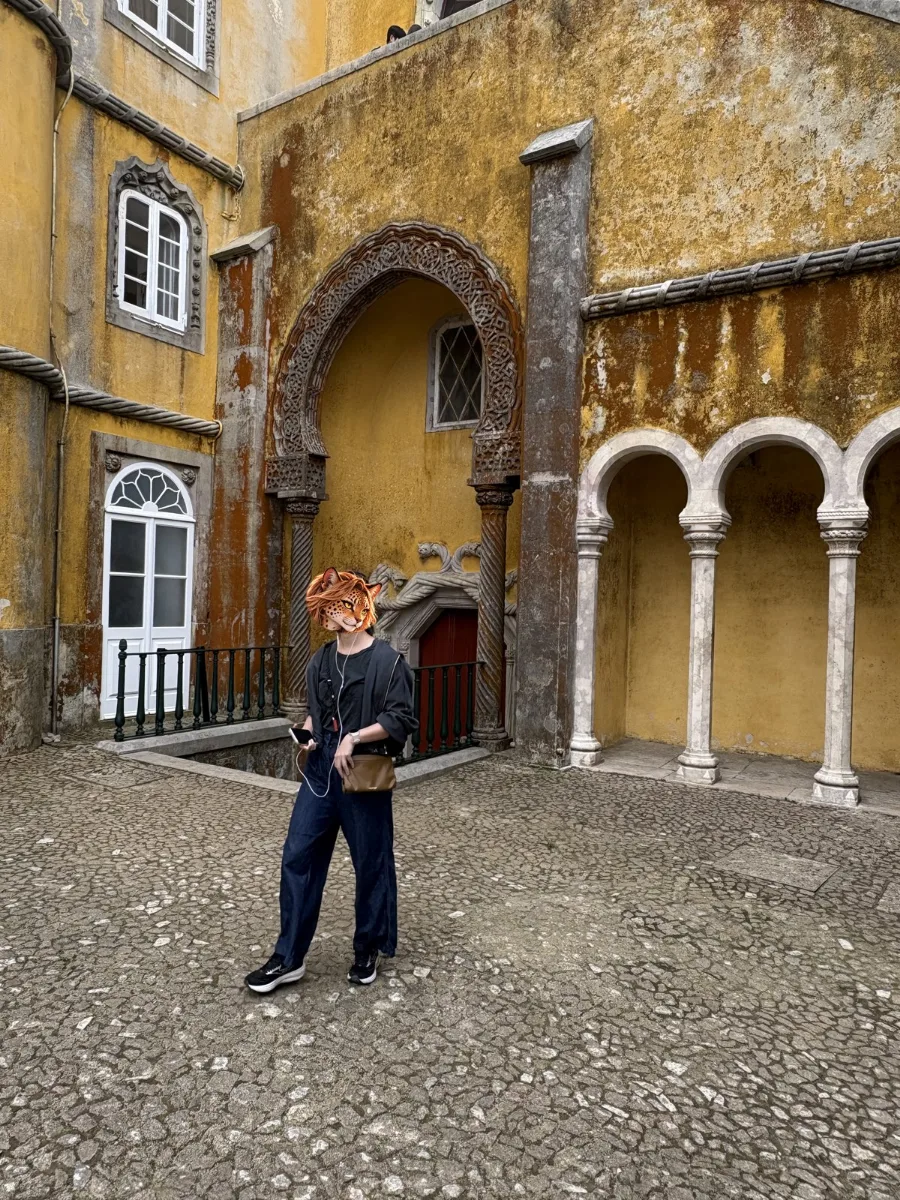
The yellow courtyard and Moorish-style arches of Pena Palace (Palácio da Pena), even more vivid in person than in photos. (Photo: TIME TRAVELER editor)
Pena Palace is probably Sintra's most iconic sight.
The palace sits on a hilltop, painted mainly in bright yellows and reds and decorated in a mix of architectural styles, so it looks just like a castle from a fairy tale.
It was built in the 19th century, is closely associated with King Ferdinand II of Portugal, and is a landmark of Romantic architecture.
In person, the palace is even more beautiful than in photos, with an enormous amount of architectural detail.
The weather in the Sintra hills changes quickly, though, and on the day we went the hilltop was wrapped in mist.

Looking out from a terrace at Pena Palace, with the distant ridges and forest covered in mist. (Photo: TIME TRAVELER editor)
At times the view was completely hidden by fog, and at others the forest and distant scenery would briefly appear.
That gave Pena Palace an air of mystery.
Quinta da Regaleira: mysterious gardens and underground tunnels
In the afternoon we went on to Quinta da Regaleira.
If Pena Palace is a fairy-tale castle, Quinta da Regaleira feels more like a private estate full of mystery.
It's best known for its gardens, underground tunnels, stone buildings and the symbolic Initiation Well.
The Initiation Well looks like a spiral staircase reaching down into the earth, and looking down from the top is spectacular.
The grounds are bigger than you'd expect, and besides the main building there are lots of corners worth exploring slowly.
I think Quinta da Regaleira is well worth including, and don't just take photos near the entrance and leave.
If time allows, give yourself longer to explore the gardens and the tunnels.
How should you plan your time in Sintra?
Here's how we did it:
- 11:00 Pena Palace
- Midday to afternoon: touring the palace and its surroundings
- 15:00 Quinta da Regaleira
- Afternoon: continuing to explore the grounds
Sintra's town and sights can fill a stay of about 2 to 3 hours, but if you want to visit Pena Palace and Quinta da Regaleira you should really allow more time.
There's also transport and walking time between the two palaces, so I recommend leaving at least about 3 hours between them. Don't pack the schedule too tightly just because they look close on the map.
Book your Sintra tickets in advance
This is something I really want to stress.
Pena Palace has timed entry slots, and Quinta da Regaleira has its own tickets and entry rules.
If you want to see both on the same day, it's best to check the available time slots for each first, then plan your transport and itinerary.
From our experience, I'd suggest starting to book at least a week in advance, and even earlier for popular time slots.
If you'd rather not research Sintra's transport, tickets and entry times yourself, you can simply book a Sintra day trip from Lisbon instead.
- Pena Palace tickets: Browse Lisbon tours and activities on Trip.com
- Quinta da Regaleira tickets: Browse Lisbon tours and activities on Trip.com
- Sintra day trips from Lisbon: Browse Lisbon tours and activities on Trip.com
7. Jerónimos Monastery: the historic building most worth going inside in Belém
Oct 7: Finally stepping inside Jerónimos Monastery

The two-storey cloister of Jerónimos Monastery, with more stone carving than you could ever take in. (Photo: TIME TRAVELER editor)
This morning we finally went inside Jerónimos Monastery (Mosteiro dos Jerónimos).
On our earlier visit to Belém we had only admired it from the outside; this time we actually toured the interior.
The monastery was commissioned by King Manuel I and is a prime example of Portugal's Manueline architecture.
In 1983, Jerónimos Monastery was inscribed on the UNESCO World Heritage List together with Belém Tower.
Once you step into the cloister, what impresses you most is the stone carving.
The columns, vaults and ornaments are all exquisitely detailed, with motifs related to seafaring, the ocean and religion.
If you love historic architecture, this is really worth taking your time over.
Book monastery tickets about a week ahead
Jerónimos Monastery is one of Lisbon's most popular sights.
If you're travelling independently, check the official opening hours and booking options first, and ideally start arranging tickets a week in advance.
We confirmed our October 7 entry time first, then fitted our other Belém plans around it on different days.
That way the ticket time didn't throw off the rest of the itinerary.
Browse Lisbon tours and activities on Trip.com
Afternoon: LX Factory
After leaving the monastery, we spent the afternoon browsing LX Factory.
LX Factory is a creative hub converted from an old industrial site, with shops, restaurants, cafés and all sorts of design-led spaces.
In contrast to Belém's historic buildings, it shows a more modern, youthful side of Lisbon.
If you like creative shops, design goods or street art, set aside some time to look around.
In the evening we went back to Penalva da Graça to enjoy the seafood rice and garlic prawns we'd had a few days earlier.
It made a lovely way to round off our time in Lisbon.
8. Getting around Lisbon: Bolt, Uber or the metro?
One thing that really struck me on this Portugal trip was how much cheaper ride-hailing in the city was than I expected.
1. Bolt and Uber: ride-hailing in Lisbon is very convenient
In Portugal we mainly used Bolt and Uber.
In our experience, fares in and around central Lisbon were usually about €4–13, depending on distance, time of day and traffic.
Our most expensive ride was from Lisbon to Sintra, at about €39.9.
Keep in mind, though, that fares can be higher at rush hour because of city traffic, and may be a bit cheaper on weekends and off-peak.
Neither Bolt nor Uber is always the cheaper one; sometimes the two apps quoted quite different prices for the same route.
My suggestions:
- Install both apps.
- Compare quotes before you book.
- At rush hour, wait a little and check the price again.
- For the airport or intercity trips, compare different modes of transport first.
For two or more people travelling together, a ride sometimes costs less than you'd think compared with public transport, and it saves a lot of time on transfers.
2. Lisbon metro: just tap Apple Pay
The Lisbon metro is also very convenient.
This time we simply tapped in with Apple Pay, with no need to buy a paper ticket each time.
A single fare was about €1.5 at the time; actual fares depend on the ticket type and the latest fare rules.
If you don't want to spend time figuring out transport cards, contactless payment by phone is a very convenient option.
Note, though, that you should follow the instructions on the local equipment and use the same payment card or device to enter and exit, so your payment records stay consistent.
3. Lisbon to Sintra: train or ride-hailing?
For our Sintra day trip, we also used ride-hailing.
From Lisbon to Sintra, a Bolt cost about €39.9 at the time.
If you're travelling as a group, a ride saves transfer time; if you're on your own or want to keep to a budget, consider taking the train with Portuguese Railways.
Trains to Sintra mainly leave from Rossio station, and once you arrive you still need to arrange transport up to the hilltop sights.
Choose based on how many of you there are, your budget and your entry times.
4. Lisbon to Porto: taking CP's Alfa train
On October 8 we wrapped up our time in Lisbon and took CP's Alfa 125 to Porto.
Portugal's main cities are connected by train, and Lisbon to Porto is a very popular intercity route.
If your travel dates are fixed, I recommend checking schedules and fares early, especially if you want a particular departure time or a more comfortable class.
Browse Lisbon tours and activities on Trip.com
9. Where to stay in Lisbon: our stay at Morais Soares 131
In Lisbon we stayed at a guesthouse around Morais Soares 131.
It isn't in the most typical tourist core, but in practice getting around by Bolt and Uber was very easy.
Depending on the day's plans, we could call a ride straight to Belém, the old town or other sights, without spending lots of time on transfers every day.
When choosing where to stay in Lisbon, I think these are the areas to consider:
1. Baixa / Rossio
Ideal for first-time visitors who want to explore the central sights on foot.
The upside is the dense cluster of sights, plus plenty of restaurants and transport options.
2. Alfama
Ideal if you love historic neighbourhoods, viewpoints and the atmosphere of traditional streets.
The terrain here is hilly, though, and some places may mean dragging your luggage uphill, so check the location before you book.
3. Graça
The area near where we actually stayed has a residential, everyday feel, plus some good viewpoints.
If you don't mind using ride-hailing or public transport, it's worth considering.
4. Avenida / Marquês de Pombal
Ideal for travellers who want more modern accommodation with good transport links, without necessarily staying in the busiest tourist area.
If you're planning a trip to Lisbon, compare different areas based on your itinerary and budget first; there's no need to focus only on the most popular tourist centre.
Find Lisbon hotels on Trip.com
10. Lisbon + Sintra: which tickets and transport should you book ahead?
One of my biggest takeaways from this trip is that you shouldn't wait until you arrive to start looking for tickets to popular sights.
Pena Palace, Quinta da Regaleira and Jerónimos Monastery in particular are all worth checking in advance for entry options and time slots.
My suggestions:
| Item | Suggested planning time | Why |
|---|---|---|
| Pena Palace | At least a week ahead | Popular time slots may sell out |
| Quinta da Regaleira | At least a week ahead | You need to space it out from Pena Palace |
| Jerónimos Monastery | At least a week ahead | Avoid missing your preferred slot |
| Lisbon to Porto train | Check early once your dates are set | Easier to compare schedules and fares |
| Sintra day trip | Plan at least a few days ahead | Easier to confirm transport and the combination of sights |
| Accommodation | Ideally more than a month ahead | More choice of popular room types and weekends |
These are suggestions based on how we planned this trip, and not every attraction follows the same ticketing rules. For actual opening hours, ticket types and booking methods, please refer to each attraction's official announcements.
If you'd rather not deal with transport, tickets and tours separately, you can also consider booking a package or pass-type product.
Browse Lisbon tours and activities on Trip.com
11. Portugal trip FAQ
Q1: How many days should I spend in Lisbon?
If you're only visiting the city itself, about 3 to 4 days covers the main sights; if you also want to go to Sintra, I recommend at least 5 to 6 days for a more relaxed pace.
Q2: Can you see Sintra in one day?
Yes, but pick your main sights first. This time we chose Pena Palace and Quinta da Regaleira and left about 3 hours between them, which kept the visit from feeling too rushed.
If you also want to see places like the Moorish Castle or Monserrate Palace, I suggest adding more time.
Q3: Are Bolt and Uber expensive in Lisbon?
In our experience, short rides in the city cost about €4–13, and the ride to Sintra was about €39.9. Actual prices depend on the time, traffic and demand, so I suggest comparing both apps.
Q4: Can I use Apple Pay on the Lisbon metro?
You can use Apple Pay in line with the contactless payment methods supported by the metro gates. This time we tapped in directly with our phones, which was very convenient. Please check the latest local information for actual fares and how it works.
Q5: Where should I go for custard tarts?
My favourite this time was Pastéis de Belém: flaky pastry and a warm filling, the best custard tarts I had on the trip.
Q6: Which seafood restaurant in Lisbon is a must?
My top pick this time is Penalva da Graça: the seafood rice and garlic prawns are both delicious, and prices are fairly reasonable.
Cervejaria Ramiro suits those who want top-quality red prawns and tiger prawns, but it's on the pricey side.
Q7: Do I need to buy Sintra tickets in advance?
I recommend checking the booking and ticketing rules for Pena Palace and Quinta da Regaleira ahead of time, and planning at least a week in advance, especially for popular time slots.
Q8: How do I get from Lisbon to Porto?
You can take an intercity train with CP, Portuguese Railways, including services such as the Alfa Pendular. This time we took the Alfa 125 to Porto. I recommend checking schedules and fares in advance.
12. Final thoughts: Portugal is best enjoyed slowly, walking and eating
What stayed with me most from this Lisbon and Sintra trip wasn't only the famous sights.
The grandeur of Belém Tower, the fairy-tale colours of Pena Palace and the mysterious gardens of Quinta da Regaleira are all well worth seeing in person.
But the trip was also full of unexpected surprises, like the seafood rice at Penalva da Graça that made us want to go back, biting into a custard tart so flaky it crackled at Pastéis de Belém, and the unforgettable red prawns and tiger prawns at Cervejaria Ramiro.
On the transport side, Bolt, Uber and Apple Pay made this independent trip easier than I expected.
If you're planning a trip to Portugal, I'd suggest at least 4 days in Lisbon plus a separate day for Sintra. Don't pack every sight in. Leave some time to stroll the old town, sit down in a café, or even wander into a random restaurant; that's often where the best surprises happen.
If you haven't sorted out accommodation, tickets, trains and your itinerary yet, you can start by comparing prices and availability for different dates, and plan entry slots for popular sights as early as possible.
I hope this first-hand itinerary helps you plan a smoother, more enjoyable trip to Portugal!
Next post: Porto Itinerary: 5 Days in Porto, Portugal – Where to Stay, Top Sights, Food and Douro Sunsets
Travel info and affiliate disclosure: some links in this article are Trip.com affiliate links. If you browse or book through them, this site may earn a commission under the platform's rules, at no extra cost to you. The accommodation, restaurant reviews, transport costs and travel impressions shared here are based on the author's own trip in October 2026. Ticket prices, opening hours and transport information can change, so please check the latest official information.
Sources and notes
[Sources and notes] Last verified 2026-11-03 - Dates and places: photo timestamps and location data - Jerónimos Monastery and Belém Tower: inscribed on the UNESCO World Heritage List in 1983 - Monument to the Discoveries: built in 1960 for the 500th anniversary of the death of Prince Henry the Navigator - Pena Palace: built in the 19th century by Ferdinand II; Cultural Landscape of Sintra inscribed on the World Heritage List in 1995 - Santa Justa Lift: under maintenance when our editor visited, so we walked up via Carmo to the viewing platform at the top (personal experience) - All photos were taken by the TIME TRAVELER editor; faces of people are covered with the editor's own character stickers and passers-by's faces are blurred - Transport schedules, tickets and opening hours may change; please check official information before you go - Booking links are Trip.com affiliate links; for prices, opening hours and booking rules, see each attraction's and operator's official announcements
Verified on:2026-11-03
Comments (0)
No comments yet.
Comments are published first and reviewed afterwards; rule-breaking comments are hidden. Only signed-in members can comment.