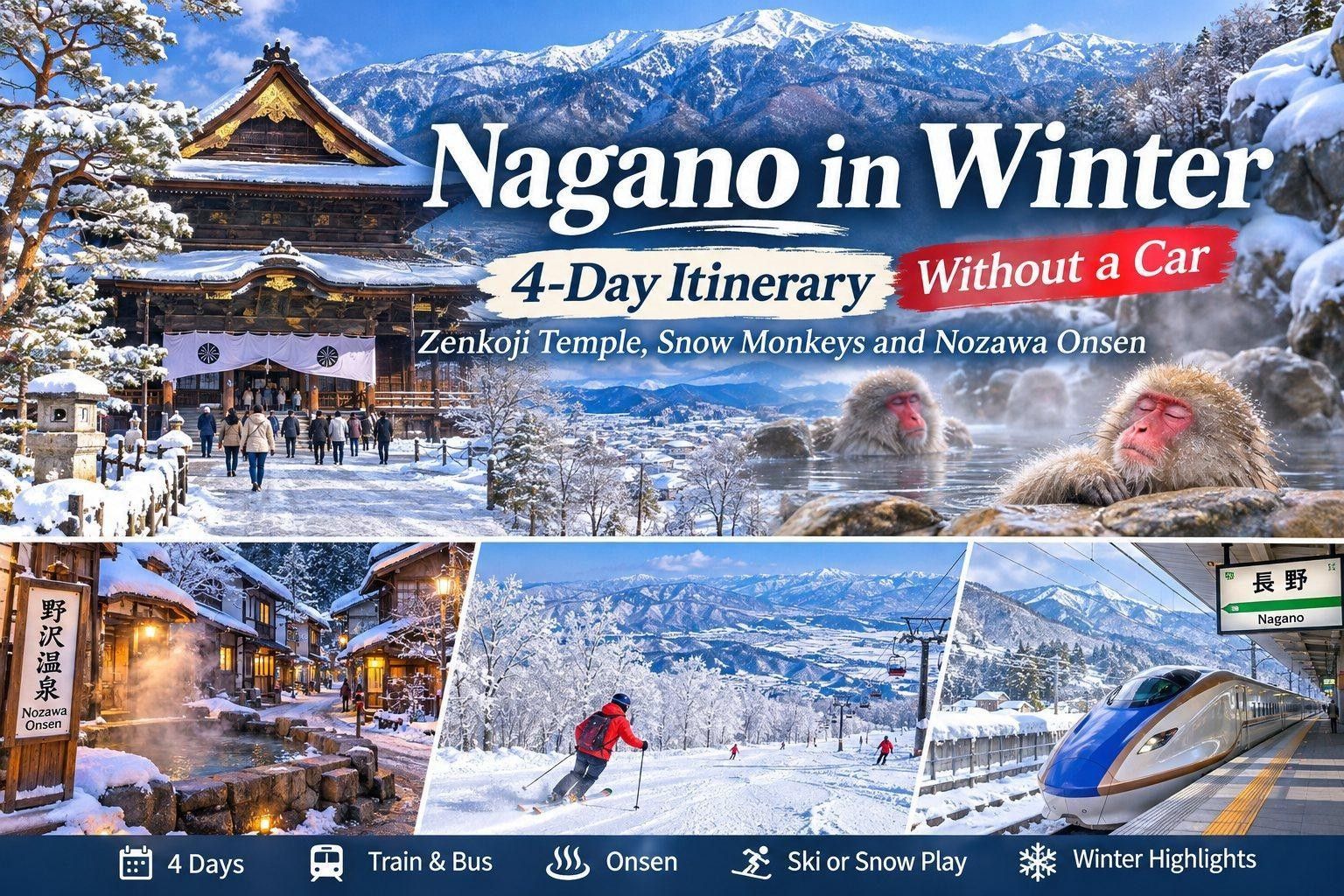
Nagano in Winter Without a Car: 4-Day Itinerary for Zenkoji, Snow Monkeys & Nozawa Onsen
Plan four winter days in Nagano without renting a car. Compare Snow Monkey Park buses, Zenkoji hours, Nozawa Onsen stays, ski dates, soba workshops, sake tasting and JR pass value.
This article was submitted by a member. Views and content are the author’s own and do not represent this site.
This article contains commercial links (affiliate or paid) that may earn the author a commission.
*A Four-Day Journey Through Zenkoji, the Snow Monkey Park and Nozawa Onsen — Plus the Fun Things That Make It Worth the Trip*
You can do Nagano in winter without a car. But one wrong order — one wrong bus, one wrong hotel, one wrong assumption about the monkeys — and the trip that should feel magical starts to feel like a race against the timetable. This Nagano winter itinerary without a car is built to prevent that. It tells you not just what to see, but what to book first, what to check on the day, what to skip without regret, and where the fun actually lives: the warm snack on a cold walk, the quiet bath after a snowy day, the village lane that glows after dark, the small experience you did not plan for but remember longest.
*Illustrative winter overview of the Nagano route. Illustrative AI-generated image. AI 生成示意圖*
The 3 questions that decide your whole trip — answer them before you book anything: 1) Are your dates inside the Ex24 bus season? 2) Can everyone in your group manage the forest trail in snow? 3) Do you have enough buffer to move from Nagano to Nozawa without relying on the last departure? If any answer is 'not sure', read the 'Before you book' section first. It will save you more money than any discount.
How to use this guide: If you have five minutes, read the 30-second route table, the dates table, and the final checklist. If you have thirty minutes, read Day 1 to Day 4 in order. Add only two or three items from the '10 fun things' section.
This guide tells you when something is not guaranteed: the monkeys might not bathe, a lift might be closed, or a small restaurant might be full.
Why this route works — and why the order matters
Nagano is one of the most rewarding places in central Japan for travellers who want winter scenery without building an entire holiday around skiing. In four days you can walk a historic temple approach in snow, watch wild macaques in a forest, and spend an evening in a hot-spring village where public baths and narrow lanes are part of everyday life. You can also eat well without spending a fortune, because the local food here is built for cold weather: warm noodles, grilled dumplings, sweet apples, hot drinks, hearty village dinners. Winter in Nagano is not just a backdrop. It is a flavour, a temperature, a pace.
The trick is giving each place its own role. Nagano City is the practical base — for Zenkoji and the Snow Monkey Park. It has the station, the luggage storage, the early buses, the wide choice of hotels and restaurants. Nozawa Onsen is worth an overnight stay, not a rushed out-and-back visit, because its atmosphere is strongest after day visitors leave. That is why this itinerary is: Day 1 Zenkoji, Day 2 monkeys, Day 3 transfer to Nozawa, Day 4 ski or slow village day. Each day has one main job. No day tries to do two big jobs at once.
If you flip the order — Nozawa first, monkeys second — you add a hotel move on the most schedule-sensitive day. If you try to do monkeys plus Nozawa in one day, you spend the day on buses instead of in the forest or the bath. Order is not a detail here. Order IS the itinerary. The travellers who enjoy this route most are not the ones who move fastest. They are the ones who put the most fragile day in the middle, with a buffer on both sides.
Who is this guide for? First-time winter visitors without a car, couples and friends who want temples plus wildlife plus onsen in one trip, families who want a realistic plan rather than a perfect Instagram plan, and anyone who would rather arrive prepared than improvise in the snow. It is also for travellers who like to add one or two small paid experiences — a food workshop, a guided walk, a ski lesson — without turning the whole holiday into a tour.
Who should adjust it? If you are a dedicated skier, add a second Nozawa night and treat the ski resort as the main event, not a side trip. If you have limited mobility, make the Snow Monkey Park optional and spend
more time in Zenkoji and Nozawa — the trail is not wheelchair- or stroller-accessible, and that is better to know now than at the trailhead. If you are travelling with young children, keep days shorter, build in warm indoor breaks, and do not promise them that the monkeys will be bathing. If you are travelling solo, keep return bus times and hotel details offline, and choose accommodation where staff can help with directions in winter.
What makes a Nagano winter trip feel expensive or cheap is rarely the headline hotel price. It is the small decisions: whether you bought a pass you did not need, whether you booked a remote inn that cost you two taxi rides a day, whether you paid for a second admission by mistake, whether you missed a bus and lost a half-day. This guide is built to protect those small decisions, because they add up faster than any single big ticket.
The 4-day route in 30 seconds — save this
| Day | Do this | The feeling you should get |
|---|---|---|
| Day 1 — Nagano | Arrive, drop luggage, walk Zenkoji approach, warm snack | Slow arrival. Warm drink, snow, dark timber, no rush. |
| Day 2 — Snow Monkey Park | Go early. Ex24 direct bus if running, forest walk, patient wildlife watching | Forest, patience, wildlife. Not a photo factory. |
| Day 3 — Nozawa Onsen | Shinkansen Nagano to Iiyama (about 10–15 min; confirm on the timetable), then Liner bus (about 25 min), evening bath and village walk | Transfer day that feels like a holiday. Lanterns at night. |
| Day 4 — Nozawa | Ski if terrain suits you, otherwise slow village day, calm departure | One main activity. No rushing. Leave with energy, not exhaustion. |
Three-day version: keep Nagano for two nights, do Zenkoji plus monkeys, then choose either a short Nozawa visit or a relaxed Nagano day. Do not add Nozawa plus skiing plus monkeys to one compressed day. Five-day version: add a second night in Nozawa. That one extra night is the difference between 'we went to Nozawa' and 'we actually experienced Nozawa'. If you have five days and you love skiing, make Nozawa two full ski days and keep Nagano as the temple and monkey base. If you have five days and you do not ski, use the extra day for a slow Nozawa village day plus one extra experience from the fun list below, such as a soba workshop or a guided snowshoe walk, if available on your dates.
What if you arrive late on Day 1? Do not try to recover the lost time by rushing. Shorten Day 1 to a walk and a meal, sleep early, and protect Day 2. A rested Day 2 is worth more than a frantic Day 1. What if it rains on Day 2? Keep the same structure but shorten the forest time, add a warm indoor break, and use the backup plan in Nagano. The itinerary survives bad weather because it has buffers built in, not because it assumes perfect weather.
Before you book: dates first, hotel second
Most people book the beautiful inn first, then discover the bus they needed does not run on their dates. Do it in the opposite order. Dates are the foundation. Hotels are the walls. If the foundation is wrong, the walls do not matter. This is especially true in early winter, when three different calendars overlap: the ski resort, the direct bus, and the village shuttle. They do not start on the same day, and assuming they do is the single most common mistake in this itinerary.
| Service | Operating period 2026-27 | What it means for you |
|---|---|---|
| Ex24 Nagano–Snow Monkey Park direct bus | 5 Dec 2026 – 5 Apr 2027 | Before 5 Dec, go via Yudanaka train + local bus. |
| Nozawa Onsen village shuttle | 12 Dec 2026 – 28 Mar 2027 | Do not rely on it before 12 Dec or after 28 Mar. |
| Nozawa Onsen Ski Resort season | Planned 28 Nov 2026 – 5 May 2027, subject to snow | Planned opening does not mean every lift is open. Check the mountain report on the day. |
| Snow Monkey Park winter hours | 09:00–16:00; arrive 30 min before closing | Weather or trail hazards can change this. Check the notice on the day. |
Date traps to watch, because they look innocent on a calendar but change your whole day:
- Trap 1 — 28 Nov - 4 Dec 2026: Ex24 has NOT started. Use Nagano Dentetsu train to Yudanaka plus local bus. Check both legs for your exact weekday, because weekday and weekend timetables can differ.
- Trap 2 — 5-11 Dec: Ex24 runs, but village shuttle has NOT started. Iiyama-Nozawa Liner still runs, but local movement in the village is less convenient, and walking with luggage takes longer.
- Trap 3 — From 12 Dec onward: both in season. Still recheck shortly before travel — snow, demand and operational decisions can change services. A service that ran last winter is not a promise for this winter.
- Trap 4 — Late March to early April: shuttle may have ended while Ex24 still runs. Do not assume a service that worked in February works in late March.
Booking order that prevents mistakes: 1) confirm dates, 2) check Snow Monkey access for those dates, 3) choose Nagano hotel, 4) reserve Nozawa accommodation, 5) compare rail fares and pass value, 6) add fun experiences only after transport and hotels are settled. Do not buy a pass or a remote inn before you know the seasonal bus runs. Do not book a non-refundable ski lesson before you know whether the relevant terrain is open. Do not book a dinner that requires you to be in Nozawa at 18:00 if your bus arrives at 17:30 and you still need to check in.
- Before you compare hotels, confirm your dates are inside the bus season. Then check Nagano City hotels on Trip.com for your dates.
A practical tip for couples and families: decide dates together, then share one note with travel dates, whether Ex24 and the village shuttle are running, ticket type, both hotel addresses, and return bus times.
Day 1: Zenkoji — start slow, finish with a warm snack
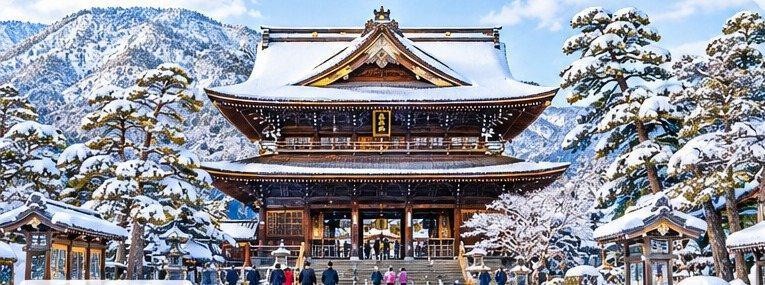
*Zenkoji-inspired winter temple scene — illustrative AI-generated image. AI 生成示意圖*
Day 1 should start slowly. After a long journey, walk the approach street, hold a warm drink, and let the shops, steam and snow set the pace before you reach the main hall.
Do not rush to the main hall. The approach street — shops, food stalls, a warm drink, a local snack — is the experience. It is a gradual transition from station district to temple precinct, and on a snowy day it is especially atmospheric. The street rewards slowness. Look up at the roofs. Look down at the stone pavement when it is wet. Step aside for locals. Let the walk set the pace for the whole trip, because if Day 1 is rushed, Day 2 will feel rushed too.
The precincts can be visited around the clock, but indoor areas have their own hours. The paid inner sanctuary (Naijin-Ken) closes at 16:00 in December, January and February. Adult / university-student fee: 800 yen. Reduced rates for school-age visitors, free for preschool children. Confirm current fee and ticket scope on Zenkoji's official visitor information. The Kyozo (sutra repository) has been listed as closed for building inspection — do not build your plan around it unless a new official notice confirms reopening. If you want to enter the paid area, plan around that 16:00 cutoff. If you arrive after 15:00, do not sprint to tick it off. The walk and grounds are worthwhile even on a short visit.
A perfect Day 1, hour by hour
- Morning / midday - Arrive Nagano, drop luggage, eat near station. Do not schedule a non-refundable evening activity right after an international arrival. Your body, your luggage, and immigration may all be slower than you expect.
- Afternoon - Walk the approach slowly. Browse, pause for a warm drink, try oyaki or a local snack. If you arrive before lunch, you have time for the paid inner sanctuary. If you arrive later, enjoy the grounds and save the interior for another time.
- Late arrival - If you arrive late, prioritise the walk plus precinct. Save the paid interior for another time if closing is too close. The grounds alone are worthwhile, and a relaxed walk beats a rushed ticket.
- Evening - Evening: early dinner, early sleep. Day 2 starts early, and you want to be rested for the forest walk. Charge your phone, lay out warm layers, check tomorrow's bus departure and return bus in advance.
What to eat on Day 1: soba is the classic Nagano lunch — warm, satisfying, easy to fit into a flexible day. Oyaki is a convenient snack that you can eat while walking, though fillings vary by shop. Apple sweets are a good small purchase if you want something sweet to bring back to the hotel. Do not over-plan Day 1 food. The point is to eat warm, eat local, and stay flexible.
Where to stay in Nagano: station area or Zenkoji side?
| Base | Best for | Trade-off | Choose it if… |
|---|---|---|---|
| Near Nagano Station | Early bus, luggage, Shinkansen to Iiyama | Separate trip to Zenkoji | You arrive late / have bulky luggage / the Day 2 bus is early |
| Near Zenkoji | Early-morning or evening walk, local atmosphere | Extra transfer to the station for Day 2 / Day 3 | You want atmosphere and do not mind an extra transfer |
When comparing hotels, check four things that matter more than a small price difference: does breakfast start early enough for your bus? Can you store luggage after checkout? What is the cancellation deadline? Can the property explain the winter route to the nearest stop? A hotel that cannot answer those questions may still be lovely, but it will not help you on a cold early morning when you need to find platform 24.
For Nozawa later, the same rule applies: prioritise clear access instructions from the bus terminal. The village has narrow, sloping lanes — the shortest map distance is not always the easiest route with luggage. Ask the property: which route do guests actually walk in snow? Is there a slope, steps, or an icy section? Can they store luggage before check-in? Those answers are worth more than a photo of a lobby.
- If Day 2 starts with Ex24 from platform 24, a station-area hotel removes one transfer on the most stressful morning. Check Nagano City hotels on Trip.com for your dates. Confirm the location, the winter walking route and cancellation terms; do not assume every property is walkable to both the station and Zenkoji.
Photo tip: Zenkoji in snow photographs best in soft daylight, not harsh midday. If the sky is grey, the dark timber plus white ground still gives you strong contrast — do not wait for blue sky to enjoy the walk. Put your phone in an inner pocket between shots, because cold drains battery faster than you expect. If your hands are cold, warm them before trying to take a careful photo, because shaky hands and cold fingers make blurry images.
A small Day 1 delight that costs almost nothing: buy a warm drink, stand for a minute on the approach, and just listen. Temple bells, footsteps in snow, shopkeepers calling out, a child laughing. Winter in Nagano is quiet, but it is not silent. That minute of listening is the kind of memory that stays with you longer than a photo.
Day 2: Jigokudani Snow Monkey Park — plan for the forest, not just the photograph
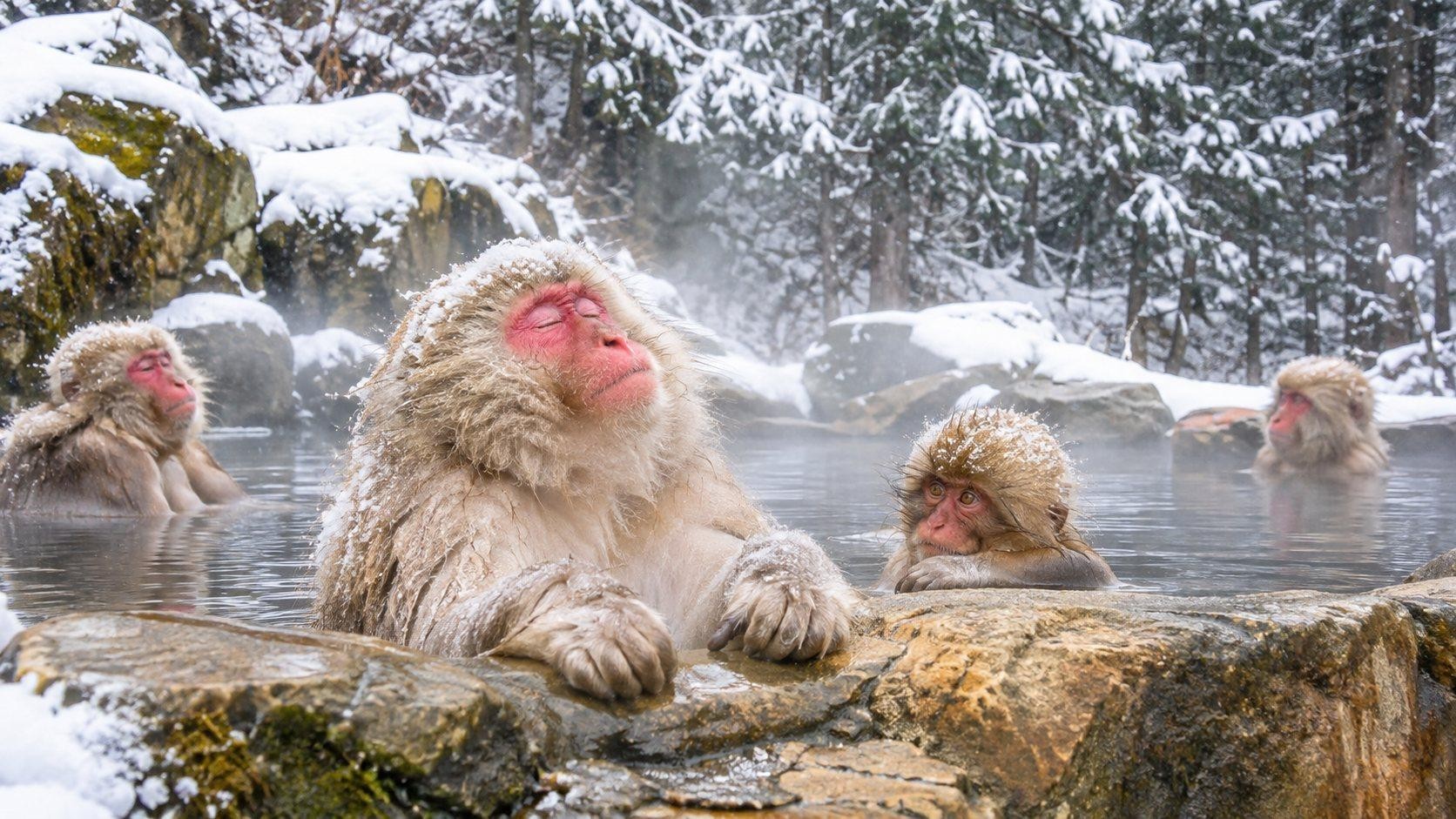
*Japanese macaques in a snowy hot-spring setting — illustrative AI-generated image. AI 生成示意圖*
Everyone has seen the photo: a macaque, eyes closed, soaking in a steaming pool while snow falls. It is real. It is also not guaranteed. That gap between the photo and reality is where most disappointments come from, and it is entirely avoidable if you set the right expectation before you go. Go for the forest. Go for the walk. Go for the chance to watch wild animals behave like wild animals. Then, if they bathe, it feels like a gift, not a promise kept.
The macaques at Jigokudani Yaen-Koen are wild. Their behaviour is not scheduled. There is no guarantee they will be bathing when you arrive. You may instead see them grooming, walking through the forest, resting, or moving between feeding areas. If you go expecting a performance, you will be disappointed. If you go expecting wildlife — patient, quiet, a little unpredictable — you will remember it for years. The forest
itself is part of the experience: snow on branches, steam in cold air, the sound of water, the feeling of being a guest in someone else's home.
That is why this day needs a plan. The outing is not just 'the park'. It is: outward journey plus forest walk plus time at the viewing area plus return walk plus wait for the next bus. In winter, every part takes longer than a summer estimate. Plan around your return connection first, then decide how long you can watch. Decide a turnaround time before you arrive, because once you are watching monkeys, time moves faster than you think, and the walk back is still part of your schedule.
Tickets: the price change you must not miss
| Ticket | Before 1 Dec 2026 | From 1 Dec 2026 | Note |
|---|---|---|---|
| Park admission – gate | 800 yen adult / 400 yen child | 1,000 yen adult / 500 yen child | Use the price for your visit date |
| Park admission – Web ticket | — | 880 yen adult / 440 yen child | Date-specific. Check the park's own Web ticket rules |
| Ex24 bus + admission set – round-trip | — | 6,800 yen adult / 3,400 yen child | Includes bus + one admission |
| Ex24 bus + admission set – one-way | — | 3,800 yen adult / 1,900 yen child | Excludes return bus |
Children under six free when accompanied by a guardian. The park's live guide may still display the pre-change fee before 1 Dec — do not copy an older blog. For winter, the park says priority is given to visitors who purchased tickets online. This is separate from the bus operator's product. Before paying, compare the Nagaden bus-and-admission set with the park's own Web ticket rules, and confirm whether the bundled admission satisfies the park's online-entry process. If unclear, contact operator or park — do not buy two admissions by mistake.
A ticket decision that saves stress: if you are travelling in peak season, sort your ticket type the night before, not at the bus stop. Know whether you have a set ticket or a separate park ticket, know what it includes, and keep a screenshot offline.
The walk: three approaches, do not confuse them
- From the Snow Monkey Park bus stop (used by the Ex24 direct express and by the local bus from Yudanaka): an uphill forest walk of about 35 minutes to Jigokudani Yaen-Koen, according to the park's official Access page. The bus stop is not the park entrance. Allow this walking time in both directions, and more in snow or ice.
- From Kanbayashi Onsen via the Yumichi Natural Trail: about 2 km, around 30 minutes in ordinary conditions. Snow, ice, crowds and footwear change this.
- From Jigokudani Parking (the car park, also used by taxi in summer): about 15 minutes on foot to the park. This is not the walk from the bus stop. Do not use the parking-lot time when you arrive by bus.
The path is a natural forest trail with uneven surfaces and steps. It is NOT suitable for wheelchairs or strollers. A companion's help does not turn a stepped, snow-covered path into step-free access. Turning back
on ice is a sensible decision, not a failure. If you are unsure, ask staff at the bus stop about current trail conditions before you start walking. They see the trail every day.
What to bring for the walk: waterproof boots with grip, warm socks, gloves (hands get cold handling phone and camera), hat, adjustable layers, waterproof outer layer, small daypack with water, tissues, power bank, medication. Keep camera battery warm — cold reduces performance. Traction aids can help on ice, but practise fitting them before the trip and make sure they are compatible with your boots. Do not wear smooth-soled fashion boots.
Route A: Ex24 direct bus from Nagano Station (5 Dec 2026 - 5 Apr 2027) Boards at Nagano Station East Exit, platform 24. Route number matters: Ex23 is the Shiga Kogen express, NOT the Snow Monkey Park service. Read destination display and confirm stop before boarding. If you are unsure, show the written name Jigokudani Yaen-Koen to staff. Showing written Japanese works better than pronouncing a transliteration in a noisy station.
Capacity-controlled. Boarding is in queue order. A full bus means waiting for the next departure. A timetable listing is not a seat reservation. Arrive early, keep a backup departure in mind, and never schedule a tight onward connection that depends on one exact bus returning on time. If your return bus is the last one that connects to your train, build in an earlier backup, because a missed connection in cold weather is not a small inconvenience.
Purchase: Webket online within published advance window, up to day before travel; limited same-day purchase at Nagano Station East Exit 'Aruyo' ticket machine. Same-day stock not guaranteed. Bus does not accept payment from driver. Convenience stores are not listed as a sales channel for this set. Check exact product name and included journey before paying. Keep your QR code or ticket where you can reach it without taking gloves off for five minutes.
Route B: via Yudanaka (on or before 4 Dec 2026) Nagano Dentetsu train to Yudanaka, then local bus to Snow Monkey Park stop, then walk. More moving parts — check train AND bus for your exact date. Weekday, weekend and seasonal timetables may differ. Before leaving Yudanaka, identify the return bus and a backup. A missed local bus means a long wait in cold weather. Keep hotel address and return route available offline, because phone signal and battery are less reliable in a mountain valley than in the city.
If you are staying near Yudanaka the night before, the route feels easier, but you still need to check the same things: train time, local bus time, return bus time, trail conditions. A shorter distance does not remove the need for a plan. It just makes the plan shorter.
How to behave — and how to get a good photo without disturbing them
- Do not feed, touch, chase, shout at, or closely stare at macaques. Give mothers with infants extra space. Do not place yourself between animals.
- Follow staff instructions, stay in designated areas. Selfie sticks and drones prohibited. Cameras must not be placed in the monkey bath. - A zoom lens lets you photograph from a respectful distance. Do not block narrow trail sections or stand where animals need to pass. - Keep food securely packed, take rubbish away. If staff ask you to move, move promptly. Their job is to protect both you and the animals.
Photo tip: the best monkey photos are not the closest ones. They are the quiet ones — steam, snow, a macaque grooming, a mother holding an infant, a young monkey shaking snow off a branch. Wait, watch, and let the scene come to you. If you chase the perfect photo, you will miss the moment. If you watch quietly, the moment often comes to you. Keep your camera ready but your voice low, and do not spend the whole visit looking through a screen.
- If you would rather not handle the transfers yourself, a bookable alternative meeting at Nagano Station is available. Treat it as an alternative to the independent Ex24 route, not a requirement.
- That option is the Nagano: Snow Monkeys, Zenkoji Temple & Sake Day Trip. Check dates, inclusions (transport and admission) and cancellation terms before you book.
Decide a turnaround time BEFORE you arrive. The walk back is part of your schedule. If weather deteriorates — heavy snow, freezing rain, poor visibility — shorten the visit. Keep a backup plan in Nagano (longer temple visit, museum, relaxed meal). A flexible day is not a wasted day.
After the monkeys: you will be cold, hungry, and a little tired, even if you loved every minute. Plan a warm lunch back in Nagano, not a second outdoor attraction. A hot bowl of noodles, a warm drink, a dry pair of socks back at the hotel — those small comforts are part of the day, not a waste of time. If you try to add another outdoor site immediately after the forest walk, you will enjoy it less and remember the cold more than the place.
Day 3: Nagano to Iiyama to Nozawa Onsen — the transfer day that feels like a holiday
The Hokuriku Shinkansen ride from Nagano to Iiyama is short — about 10–15 minutes, depending on the service. Confirm the exact time on the current timetable. The transfer still needs attention. At Iiyama, follow signs for Chikuma River Exit and the Nozawa Onsen Liner. Liner: platform 4, approx. 25 minutes. Ordinary Nagaden route bus: platform 2, approx. 40 minutes. Different services — check destination before boarding. Buy Liner ticket at machine beside stop, confirm fare and payment methods on the day. If you are unsure which bus is yours, show the written name Nozawa Onsen to staff. Do not assume the first bus that arrives is the right one.
If you have a large suitcase or ski bag, check luggage arrangements with your accommodation and bus operator. Keep gloves, medication, valuables and warm layer in a small bag that stays with you. Ask your inn for the best walking route from the bus stop — Nozawa's lanes are narrow and hilly, wheeled luggage is
difficult in winter. If your inn offers a pickup or luggage help, confirm it in advance, not on arrival when you are standing in snow with a heavy bag.
Arrive in daylight if you can. Check in, learn the route back to the bus terminal, and keep the evening unhurried. That evening is the reason you came. Do not fill it with a rushed ski fitting, a distant dinner, and a late bath all in one night. Pick one evening activity, do it slowly, and let the village do the rest.
The village after dark: why one night changes everything
During the day, Nozawa is busy — skiers, day-trippers, shops, lifts. After they leave, the village exhales. Lanterns come on. Steam rises from the baths. The lanes get quiet. You walk back to your inn with wet hair, warm from the bath, a little hungry, a little sleepy. That is the Nozawa you cannot get from a day trip. It is not a single attraction. It is a feeling that only appears when you slow down and stay overnight.
Nozawa is both a ski destination and a residential hot-spring community. Walk quietly near homes, do not block entrances for photos, follow posted signs. Residents still need to use the streets in heavy snow — do not stand in the middle of a narrow road checking your phone. If you want a photo, step to the side, take it quickly, and move on. The village is not a theme park. It is someone's home, and the best visitors are the ones who notice that.
An evening walk that works: after check-in, walk to the nearest public bath, soak, walk back slowly, eat dinner, walk again if you still have energy. You do not need a detailed evening plan. You need warm clothes, a small towel, a little cash, and a willingness to walk without a destination. The lanterns, the steam, the quiet lanes — they are the destination.
The public baths: 13 Sotoyu, and the etiquette that matters
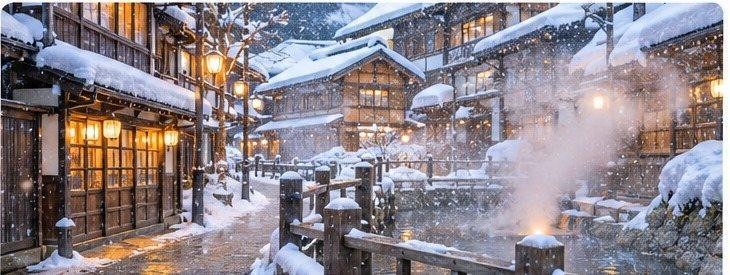
*A lantern-lit winter onsen village — illustrative AI-generated image. AI 生成示意圖*
The thirteen community-maintained Sotoyu baths are the heart of the village. Generally free, donations welcomed. Facilities are often simple — bring a small towel and toiletries. Wash and rinse thoroughly BEFORE entering the soaking pool. The bath is for soaking, not washing. Keep towels and hair out of the
water, speak quietly, leave the space tidy. If you are unsure, watch what locals do, or ask your accommodation. A few minutes of observation prevents most mistakes.
Some baths can be very hot. Test carefully, enter gradually, leave if you feel dizzy. A paid day-use option, Furusato-no-Yu, is listed at 700 yen adult / 500 yen child — check current hours and prices. Bring cash for donations and small purchases. Do not leave valuables unattended. If you feel unwell, leave the bath, sit down, drink water, and tell someone. Hot water plus cold air plus dehydration is a combination to respect, not to push through.
First-time bather? Observe posted instructions or ask your accommodation. Some facilities have separate entrances or rules, layout may be unfamiliar. Allow time to wash, soak and dry off without rushing to the next reservation. A relaxed bath is more enjoyable than a rushed one. If you have tattoos, check the facility's policy in advance, because rules vary and it is better to know before you arrive than at the entrance.
A fun way to explore: make your own onsen-hopping list, but keep it small. Pick three baths that are easy to reach from your inn, not all thirteen. Note which ones were hottest, which were quietest, which had the best walk. That small list becomes a story you tell friends, and it is more enjoyable than a frantic attempt to tick off every bath in one evening.
Where to stay in Nozawa Onsen
| Location | Advantage | Trade-off |
|---|---|---|
| Village centre | Restaurants, public baths, evening atmosphere | Longer uphill walk to the lifts |
| Near ski lifts | Less morning walk with equipment | Less convenient for evening dining / bus transfer |
| Near bus terminal | Easy arrival / departure | May lack evening atmosphere |
Before booking, confirm: does rate include meals? Private bath or only shared? Luggage storage before check-in / after checkout? How to reach property in snow? Equipment storage and drying if skiing? Towels provided for Sotoyu? If dinner is included, confirm serving time and whether late arrival is possible. If breakfast is included, confirm start time, because a ski day starts early and a village day starts slowly, and the same breakfast time does not suit both.
- Nozawa's small inns fill first in peak ski weekends. Prioritise a village-centre, ski-access or bus-terminal location; check the meal plan, baths and luggage handling, and do not claim ski-in/ski-out unless the listing confirms it.
- Check Nozawa Onsen hotels on Trip.com for your exact dates, and compare cancellation terms before you commit.
Food in Nozawa: restaurants can be small and busy in ski season. Do not assume every place accepts cards or stays open late. Ask your accommodation about dinner reservations. Communicate dietary restrictions directly to property or restaurant, not through a generic translation app at the table. If your inn includes
dinner, that is often the easiest and most relaxing option, because you do not need to search for a table in the cold after a bath.
A Nozawa evening that many travellers love: bath, dinner, short walk, early sleep. It sounds simple, and it is. That is why it works. You do not need a bar crawl or a late-night activity to make the evening memorable. The village does the work if you let it.
Day 4: Ski, explore, or slow down — choose one, not all three
Nozawa Onsen Ski Resort 2026-27: planned 28 Nov 2026 - 5 May 2027, subject to snow. Early-season 'Season's First Ride' 28 Nov - 18 Dec: adult one-day lift ticket 5,600 yen vs regular 7,800 yen. This is a defined early-season price, not a winter-long fare. Confirm price, open lifts and trail conditions before buying. A planned opening date does not mean every lift or run is open. A discounted ticket is not a bargain if only a small amount of suitable terrain is open or weather makes the day unpleasant.
Beginners: ask which runs are open and suitable, arrange lessons in advance during busy periods.
Village shuttle: 12 Dec 2026 - 28 Mar 2027. It serves local movement in village and ski area, NOT the intercity connection to Iiyama. Do not rely on it before 12 Dec. If you are staying far from the lifts, check whether the shuttle helps you, or whether you need to walk, or whether a different inn location would have been easier.
Ski day vs village day — how to decide in two minutes
| Choose a ski day if… | Choose a village day if… |
|---|---|
| The resort has open terrain suited to your ability | Snow conditions are uncertain, or you do not ski |
| You have enough time for equipment, tickets and lifts | You want Nozawa beyond the resort |
| You are comfortable spending most of the day outdoors | You want a slower rhythm: baths, shops, food, walking |
A village day is not a consolation prize. It is often the reason an overnight stay feels different from a day trip to a ski area. Walk between small streets, visit a public bath, browse shops, enjoy a meal, take photos in daylight, talk to your inn host. For mixed groups, agree on priorities before arriving — skiers want an early start, non-skiers may prefer a late breakfast and a bath. Check whether accommodation can store luggage and whether the shuttle makes it practical to split up and meet later.
If you have only a few hours before departure, do not squeeze in a full ski session plus long bath plus distant lunch. Choose one main activity and leave time for luggage and bus. A calm departure is worth more than one extra stop.
Can you combine Nozawa + Snow Monkey Park in one day?
Nagaden lists a seasonal express between Nozawa Onsen and Snow Monkey Park from 5 Dec 2026 - 5 Apr 2027. Check detailed timetable and fare on operator's current route page — do not copy last winter's times. This is a limited connection, not a flexible shuttle. The walking trail, entry process and return boarding time constrain time at the park. Most first-time visitors will be more comfortable visiting the park from Nagano on Day 2 and moving to Nozawa on Day 3. If you are tempted to combine them, ask yourself: would you rather spend two hours on a bus or two hours in the forest? Most people choose the forest.
10 fun things that make this trip richer — pick 2 or 3, not all 10
Pick the ones that match your group, your energy, and your dates. Skip the rest without guilt.
Soba-making workshop in Nagano — the tastiest souvenir
Nagano is famous for soba, and making it yourself is more fun than just eating it. If you are travelling with children, they often love this more than a temple visit, because they get to make something with their hands. If you are travelling as a couple, it is a calm, unhurried activity that does not require athletic ability or cold tolerance.
How to fit it in: Day 1 afternoon in Nagano, if you arrive before lunch and have at least two hours free. Or Day 2 late afternoon back in Nagano, if you return early enough and still have energy. Check availability for your exact date, language support, group size, and whether the workshop includes a meal or just the making. Book in advance in peak season, because small workshops fill up.
- If you want a soba-making or food workshop in Nagano, check language support, group size, duration, whether a meal is included, and the cancellation terms for your exact dates. Book in advance in peak season, because small workshops fill up.
Sake tasting in Nagano — warm up, learn something, sip slowly
Nagano has a long sake-brewing tradition, and a tasting is a good way to understand it without needing to be an expert. You learn the difference between dry and sweet, the role of rice and water, and why the same sake tastes different when it is warm, room temperature, or chilled. A tasting is not a drinking contest. It is a slow, small-pour experience that pairs well with a cold day, because you are indoors, warm, and learning something. If you do not drink alcohol, many breweries or shops also offer non-alcoholic options or local snacks, but check in advance so you are not disappointed.
How to fit it in: Day 1 late afternoon in Nagano, after Zenkoji, before dinner. Or Day 2 evening back in Nagano, after a warm lunch and a rest. Do not schedule a tasting right before an early bus or a long walk, and do not drink before the forest trail. Keep it as a relaxed evening activity, not a pre-hike warm-up.
- If you want a sake tasting or brewery visit in Nagano, check the age limit, what is included and the cancellation terms for your exact dates. A food-and-culture walk that includes tasting is one option — see the food-tour note below.
Guided snowshoe walk — the forest without the crowds
If you loved the Snow Monkey Park forest but wanted more time in the snow, a guided snowshoe walk is a natural next step. Snowshoes let you walk on deep snow without sinking, and a guide shows you animal tracks, winter trees, and quiet viewpoints you would not find alone. It is slower than skiing, quieter than a resort, and suitable for people who like walking but do not ski. The guide also handles safety, route, and equipment, which removes the stress of navigating an unfamiliar winter trail alone.
How to fit it in: Day 4 morning in Nozawa, if you are not skiing, or Day 2 afternoon if you return early and the operator runs a short walk near Nagano. Check fitness requirements, age limits, equipment included, group size, and weather cancellation policy. A snowshoe walk that is too long for your group is not fun, so choose a short, guided, beginner-friendly option first.
- If you want a guided snowshoe or winter walk near Nagano or Nozawa, check fitness requirements, age limits, whether equipment is included, group size and the weather cancellation policy for your dates. Choose a short, beginner-friendly option first.
Ski lesson in Nozawa — start right, enjoy the whole day
If you have never skied, or you skied once and felt scared, a lesson is the best money you can spend in Nozawa. Without a lesson, many beginners spend the day falling, cold, and frustrated. With a lesson, they spend the day learning, laughing, and actually moving. If you are already an intermediate skier, a short lesson can still help, because a local instructor knows which runs are in best condition on that day.
How to fit it in: Day 4 morning, booked in advance, with equipment rental arranged the night before. Do not book a full-day lesson if you only have a half-day before departure. A half-day lesson plus a relaxed village afternoon is better than a full-day lesson that makes you miss your bus.
- If you want a ski lesson or rental in Nozawa Onsen, check the level, language, equipment, meeting point and cancellation terms for your dates. Arrange rental the night before, and do not book a full-day lesson if you only have a half-day before departure.
Onsen-hopping bingo — a playful way to explore Nozawa
Instead of trying to visit all thirteen Sotoyu baths, make a small bingo card with your group: one bath that was hottest, one that was quietest, one with the best walk, one where you felt most relaxed, one you would return to tomorrow. Pick three baths, not thirteen, and tick them off as you go. It turns a simple bath into a game, and it gives you something to talk about at dinner. It also stops you from rushing. The goal is not to collect baths. The goal is to notice how each one feels different: the temperature, the light, the sound of water, the walk there and back.
How to fit it in: Day 3 evening and Day 4 morning. Bring a small towel, toiletries, cash for donations, and a dry bag for wet items. Do not bring valuables to a public bath. Keep your phone in your pocket or leave it at the inn, because a wet phone in a steamy changing room is a bad combination.
Night lantern walk in Nozawa — no ticket, just atmosphere
After dinner, put on warm clothes and walk. No destination, no ticket, no timetable. The village after dark is the experience. Lanterns, steam, quiet lanes, snow on roofs, the sound of your boots. Walk slowly, step aside for locals, and do not block doorways for photos. If you have a camera, take a few shots, then put it away and just walk. The best night walk is the one where you do not try to capture everything. You let the village be a little mysterious, and you remember it better because you were present, not filming.
How to fit it in: Day 3 evening, after check-in and bath, before or after dinner. Keep it short if it is very cold or icy. Wear boots with grip, bring gloves, and keep your phone charged. If you are travelling with children, keep the walk short and stay on well-lit lanes.
Oyaki and apple tasting — Nagano flavours you can actually remember
Oyaki is a filled wheat-flour dumpling, and it is one of those foods that tastes better in Nagano because you eat it warm, on a cold day, while walking. Fillings vary by shop — vegetable, sweet bean, pumpkin, mushroom — so try two different ones and compare. Apples are another Nagano signature. A crisp apple, a warm apple sweet, or a small apple juice from a local shop can be a simple, memorable snack. You do not need a food tour to enjoy this. You need a warm snack, a cold day, and a willingness to try something you have not had before.
How to fit it in: Day 1 afternoon on the Zenkoji approach, Day 2 lunch back in Nagano, Day 4 lunch in Nozawa. Ask shop staff what is most popular that day, and buy a small amount first. If you love it, buy more. If you do not, you have not wasted a meal.
- One bookable option that covers local food and a sake tasting in one walk is the Food & Culture Walk in Nagano: Oyaki, Sake, Matcha & Zenkoji, which meets in front of Nagano Station. Check dates, inclusions, duration and cancellation terms before you book.
Zenkoji early-morning walk — the temple before the crowds
If you stay near Zenkoji, wake up early one morning and walk the approach before most visitors arrive. The street is quiet, the air is cold, the temple feels different. You do not need to enter a paid area to enjoy it. The walk itself is the experience. If you stay near the station, you can still do a short early walk on Day 1 if you arrive early enough, or on Day 2 before your bus, if your bus is not too early. Do not sacrifice sleep for a photo. A rested traveller enjoys a quiet walk more than an exhausted one chasing a sunrise.
How to fit it in: Day 1 early morning if you stayed overnight in Nagano before, or Day 2 pre-bus if time allows. Keep it to 30 minutes, dress warmly, and return to the hotel for breakfast. The point is quiet, not a marathon.
Iiyama slow stop — a 30-minute pause that makes the transfer feel like travel
If your connection allows, step outside, look at the mountains, buy a warm drink, check the station map, and confirm your Liner platform before you need it. You do not need to leave the station area or add a sightseeing stop. You just need to breathe, orient yourself, and arrive in Nozawa feeling calm, not flustered. If your connection is tight, skip this and go straight to platform 4. A calm transfer is better than a rushed sightseeing detour.
How to fit it in: Day 3, only if your Shinkansen and Liner times leave a buffer of at least 20 minutes. If the buffer is smaller, go straight to the Liner stop. Do not risk a missed bus for a photo.
Nozawa souvenir hunt — small, useful, and easy to carry
The best souvenirs from Nozawa are small, useful, and easy to carry: a small towel for baths, a local snack, a hand warmer, a postcard, a small ceramic cup. They are not expensive, they do not take up luggage space, and they remind you of the trip when you use them at home. Avoid buying a large, fragile souvenir on Day 1, because you will carry it for three more days. Buy small things as you go, and save any larger purchase for Day 4 in Nozawa, when you are close to departure.
How to fit it in: Day 1 small snack or postcard in Nagano, Day 3 small towel or snack in Nozawa, Day 4 one useful souvenir before departure. Keep receipts and check customs rules for food items if you are flying home internationally.
Which extras to pick: food lovers — soba workshop plus a tasting; outdoor lovers — snowshoe plus a ski lesson; slow travellers — onsen bingo plus a night walk; families — soba workshop plus onsen bingo; tight budgets — the night walk, an early Zenkoji walk, and onsen bingo, which cost almost nothing.
Getting to Nagano + Is the JR EAST PASS worth it? From Tokyo: Hokuriku Shinkansen to Nagano, fastest services roughly 1 hr 39 min (varies by train). From Narita or Haneda, add airport transfer plus immigration plus luggage plus station navigation. Do not assume an international flight connects comfortably with a mountain bus the same day — an overnight stop makes the trip more resilient. From Kanazawa: same Shinkansen corridor, direct. From Osaka: generally connect via another major hub — compare full journey, not just headline time. If you are arriving from a long flight, the most relaxing choice is often to stay in Tokyo or Nagano on arrival night, not to rush to Nozawa the same day.
If carrying ski equipment, check railway oversized-baggage rules and accommodation storage policy. Keep valuables, travel documents and medication in your day bag. Save station maps and hotel directions offline in
case reception is weak or battery runs low. If you are travelling with a large suitcase, ask your Nagano hotel whether they can store it while you go to Nozawa with a smaller bag. That one decision can make the Nozawa transfer much easier, because a small bag is easier on narrow lanes and on the Liner bus.
JR EAST PASS: do the maths, do not guess Pass Price (from 14 Mar Covers Does NOT cover 2026) JR EAST PASS 5-day 35,000 yen Eligible JR East services + Tokaido Shinkansen, specified partner lines Nagaden Snow Monkey bus set, Nozawa Liner JR EAST PASS 10-day 50,000 yen Eligible JR East services + Same exclusions as specified partner lines above
For THIS 4-day route, if your only longer rides are Tokyo-Nagano plus Nagano-Iiyama, a multi-day pass may cost MORE than individual tickets. List each rail segment, operator and date, check coverage, then total individual fares. Keep private buses in a separate column. A pass is valuable when it solves a real transport-cost problem, not simply because the trip contains a Shinkansen ride. Before purchase, confirm validity window, eligible trains, seat reservation rules and exclusions. If you are also travelling to other JR East areas before or after Nagano, the pass may become worthwhile, but you must add up those journeys too, not just the Nagano leg.
Quick test: if you are only travelling Tokyo to Nagano, compare exact one-way / return tickets first before buying any pass.
Budget method that actually works: separate fixed costs (rail to Nagano, Snow Monkey access, Nagano-Iiyama train, Iiyama-Nozawa bus, accommodation) from choices (Zenkoji paid inner sanctuary, ski lift / rental / lessons, paid bathing, guided activities, workshops, tastings). Compare accommodation by total price including meals plus cancellation plus access, not just headline rate. Keep small cash reserve for bath donations and places that may not accept your card. Confirm whether transport tickets require cash, machine purchase or online booking. Do not rely on unverified mobile payment for the last bus of the day. If you add a fun experience, add it to the choices column, not the fixed column, so you can see what the trip costs without extras and what it costs with them.
- The Nozawa Onsen Liner does not require a reservation. Buy your ticket at the machine beside the stop before you board; prepaid IC cards such as Suica, PASMO and ICOCA can be used. Confirm the fare and the current timetable for your date. This is a public bus, not a private tour.
Food and local flavours: leave room for Nagano
Nagano is known for soba, apples, oyaki and other regional foods. Soba after a cold walk is warming, widely available and easy to fit into a flexible day. Oyaki — a filled wheat-flour dumpling — is convenient as a snack, though fillings and preparation vary by shop. Apple sweets and seasonal produce make good small purchases, but check opening hours if you plan to visit a specific shop outside main shopping streets. If you want to try something new, ask staff what is most popular that day. A small recommendation from a local shopkeeper is often better than a long online list.
Where to eat without stress: in Nagano City, eat near the station or approach street on Day 1 — you do not need a reservation for a good soba lunch. In Nozawa, ask your accommodation about dinner — small restaurants fill up in ski season. If your room includes dinner, confirm serving time before booking a late activity. Travellers with dietary restrictions should communicate them directly to property or restaurant, not rely on generic menu translation. If you have allergies, write them down in Japanese on a card and show it. That is clearer than trying to explain in English at a busy counter.
A small food plan that works: Day 1 soba lunch near Zenkoji, oyaki as afternoon snack. Day 2 warm lunch back in Nagano after monkeys, because you will be cold and hungry. Day 3 dinner in Nozawa — book ahead if your inn does not include it. Day 4 slow lunch in the village before departure.
What to pack, what to budget, and what to leave flexible
Winter packing: prepare for walking and changing conditions
- Snow Monkey Park — Waterproof boots with grip, warm socks, gloves, hat, adjustable layers, waterproof outer layer — more useful than a bulky coat that becomes uncomfortable once you warm up.
- Snow Monkey Park — Small daypack: water, tissues, portable battery, medication. Keep camera battery warm. Bring a small plastic bag for wet gloves or socks.
- Nozawa — For Nozawa: clothing for your planned activity, small towel plus toiletries for baths, compact waterproof pouch for wet items. Skiers: check if accommodation rents or stores equipment and whether lift tickets can be purchased online.
- Safety — Traction aids only if you know how to fit them and they suit your boots. Not a substitute for walking carefully. If trail is icy, slow down, use designated routes, turn back if you cannot maintain secure footing.
- Experiences - For fun experiences: if you book a workshop or tasting, check dress code, whether aprons are provided, and whether you need to bring anything. For a snowshoe walk, check what is included and what you need to bring.
What to book first — and the 60-second checklist before you pay
- 1. Confirm exact operating dates: Ex24, Nozawa shuttle, any seasonal direct bus.
- 2. Check Snow Monkey Park opening notice, trail conditions, ticket requirements for YOUR date.
- 3. Choose Nagano hotel by first bus departure plus luggage needs. Choose Nozawa hotel by village-centre / ski / bus-terminal walk.
- 4. Compare JR individual fares vs JR EAST PASS ONLY for eligible rail journeys.
- 5. Add only 2 or 3 fun experiences, after transport and hotels are settled. Check each one's date, inclusions, cancellation.
- 6. Save hotel addresses (in Japanese), bus stops, return departures, offline maps, QR ticket screenshots.
- 7. Pack waterproof footwear with grip plus layers for a slow outdoor walk. Leave buffer before Shinkansen / airport / flight.
Japanese names to save on your phone: Nagano Station, Zenkoji, Yudanaka Station, Jigokudani Yaen-Koen, Iiyama Station, Nozawa Onsen. Showing the written name works better than pronouncing transliteration. Save them as a note, not just as a photo, so you can copy and paste them into a map app if needed.
Winter daylight is short. Do the forest walk and outdoor transfers in daylight. Keep phone in inner pocket — cold reduces battery. Carry at least one backup payment method separately from your main wallet. Download offline maps for Nagano, Yudanaka, Iiyama and Nozawa before leaving reliable Wi-Fi. Tell someone at home your rough plan: which nights in which town, and when you expect to be back in contact. That is not paranoia. That is good travel practice in winter.
A final recommendation For a first winter visit without a car: stay near Nagano Station for the first two nights, visit Zenkoji on arrival day, devote Day 2 to the Snow Monkey Park, then spend one night in Nozawa Onsen. Add one food experience in Nagano and one slow evening in Nozawa. That is enough. This keeps the most
schedule-sensitive excursion separate from the hotel transfer, and gives the onsen village enough time to feel like a destination, not a quick stop.
The trip is at its best when you plan around the season rather than trying to defeat it. Check the bus calendar, allow time for the forest trail, choose accommodation for its actual walking access, and keep one flexible block in the schedule. With those decisions made before departure, Nagano's temples, winter forest and hot-spring village fit together — without the stress of driving on snowy roads. And with two or three small delights tucked inside, the trip feels not just well-planned, but alive.
- Start with the two decisions that shape everything: check hotels for your exact dates, then compare transport. Do not book a remote inn before you confirm the bus runs.
- Check Nagano City hotels on Trip.com for the Nagano nights.
- Check Nozawa Onsen hotels on Trip.com for the Nozawa nights.
- Then pick two or three fun extras that genuinely help your group: a soba workshop or the Food & Culture Walk in Nagano if you want a booked tasting, and a ski lesson or snowshoe walk in Nozawa if the terrain and your dates support it. Skip the rest without guilt.
7 mistakes that ruin this trip — and what to do instead
| Mistake | What to do instead |
|---|---|
| Treating Ex24, Ex23 and local buses as interchangeable | Confirm the route number, destination and boarding point. Ex23 is not Snow Monkey Park. |
| Assuming every winter service starts when the ski resort opens | Check Ex24, the village shuttle and the ski season separately — they have different calendars. |
| Booking by straight-line distance | Check elevation, steps, surface and luggage access. In snow, metres lie. |
| Assuming macaques will be bathing | Visit for wildlife observation, not a promised photo. |
| Using a JR pass to cover all transport | Separate eligible rail from private / local buses before you calculate. |
| Leaving no time for the forest walk | The bus stop is not the park entrance. Add about 35 minutes of walking time each way from the Snow Monkey Park bus stop, and more in snow or ice. |
| Tight connection after the park / relying on the shuttle outside its season | Keep a buffer. If your dates are before 12 Dec or after 28 Mar, verify local access. |
| Booking 10 fun experiences and rushing all of them | Pick two or three. Leave the rest for a future trip. |
Contingency: if a bus is full, ask staff which later departure is available and whether ticket remains valid. If train or bus delayed, protect the most important connection first. If trail is closed or unsafe, do not attempt unofficial route — return to transport stop and use time for a safer activity. If you miss the final connection, know your fallback: hotel phone number, address in Japanese, operator service info, enough battery and payment for an unexpected wait. This matters most for late arrivals and families with children. If a workshop or tasting is cancelled due to weather, ask about rescheduling or a refund, and use the time for a warm indoor activity instead of forcing an outdoor replacement.
Responsible travel: Nozawa is not a theme park. Residents use the same narrow streets. Keep doorways clear, avoid loud conversations late at night, do not photograph people at close range without permission. At the park, never feed, touch, or provoke macaques. Take rubbish back. At baths, follow washing and soaking etiquette and leave changing area tidy. At workshops, respect the instructor, the ingredients, and the other participants. Good visitors are quiet, curious, and kind, and they are welcomed back.
Frequently asked questions
Q: Can I visit the Snow Monkey Park without a car? A: Yes. Use the dedicated Nagaden Snow Monkey Express from Nagano Station when it operates, or Nagano Dentetsu to Yudanaka plus local bus. Check operating dates and ticket conditions for your exact day.
**Q: Will the monkeys definitely be bathing?**
No. They are wild, not a scheduled show. They may visit the pool, move through the forest, or not appear. Check park's latest appearance info or live camera as guidance, not a guarantee.
**Q: How much is admission in Dec 2026?**
From 1 Dec 2026: gate 1,000 yen adult / 500 yen child; Web tickets 880 yen / 440 yen. Under six free with guardian. Confirm live price before purchase.
**Q: Is the trail suitable for wheelchairs or strollers?**
No. Slopes, steps and unpaved surfaces. Do not attempt if snow or ice makes it unsafe.
**Q: Should I buy a JR EAST PASS for this 4-day trip?**
Not automatically. 5-day 35,000 yen / 10-day 50,000 yen, but Snow Monkey express and Nozawa buses are separate. Add up JR journeys you will actually take first.
**Q: Is one night in Nozawa enough?**
One night gives you an evening plus partial day. If skiing is the main purpose, two nights are more comfortable. If village atmosphere is the priority, one night can still make the route worthwhile.
**Q: Families / older travellers / limited mobility?**
Families: consider trail length, cold, and that monkeys may not bathe. Keep snacks packed away from animals. Older travellers: allow extra time on steps and ice. Limited mobility: trail is not wheelchair or stroller-accessible — Zenkoji plus Nozawa's more accessible activities may make a better trip. Solo travellers: keep return bus times plus hotel details offline.
**Q: Can I do this trip in 3 days?**
Yes, but keep Nagano as base for 2 nights, do Zenkoji plus monkeys, then choose either a short Nozawa visit or a relaxed Nagano day. Do not try to add everything to one compressed day.
**Q: Which fun experiences are worth paying for?**
Pick 2 or 3 that match your group: food lovers — soba workshop plus tasting; outdoor lovers — snowshoe plus ski lesson; slow travellers — onsen bingo plus night walk. Do not book all 10.
**Q: What if it rains or snows heavily on Day 2?**
Shorten the forest visit, keep a backup plan in Nagano, and protect your return connection. A flexible day is not a wasted day.
Disclosure
This guide contains Trip.com affiliate placements. If you book through a verified Trip.com link in this article, the publisher may earn a commission at no extra cost to you. Prices, availability, inclusions and cancellation terms are set by the operator or property — always confirm on the checkout page for your exact dates.
Sources to recheck before publication / travel
Nagaden official 2026-27 winter bus timetable, Snow Monkey Park official visitor information, Zenkoji official guide, Nozawa Onsen official resort / shuttle / Sotoyu pages, JR EAST PASS official coverage and terms.
Comments (0)
No comments yet.
Comments are published first and reviewed afterwards; rule-breaking comments are hidden. Only signed-in members can comment.